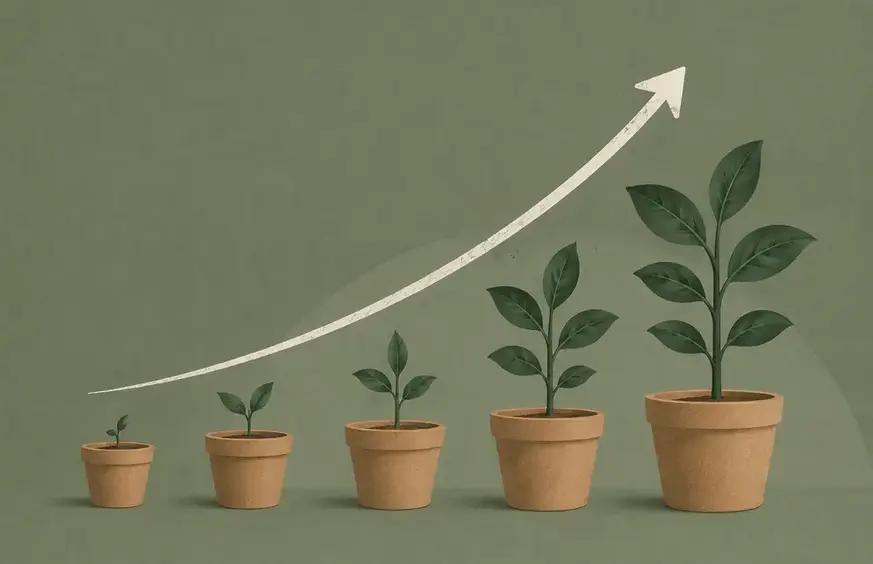
Many businesses assume that continuous growth requires continuously increasing their marketing efforts. More advertising, more social media posts, larger budgets, and constant campaigns often seem like the obvious path to attracting more customers. Yet some businesses continue growing steadily without dramatically increasing their promotional activity. While it may appear that they simply market less, the reality is far more strategic.
These businesses have built systems that generate growth naturally. Their reputation attracts new opportunities, their customer experience creates referrals, and their existing customers continue returning and recommending them to others. Rather than relying solely on paid promotion, they allow trust, customer satisfaction, and operational excellence to become powerful forms of marketing.
Marketing extends far beyond advertising. Every interaction shapes a business's reputation, customer experience, referrals, reviews, and brand perception. Businesses that consistently solve real problems, deliver exceptional service, and keep their promises create experiences customers willingly share with others. Companies that appear to market less often invest more heavily in strengthening customer relationships, improving operations, and consistently delivering value.
Ultimately, sustainable growth becomes the result of strong business fundamentals rather than constant promotion. Marketing remains important, but businesses that consistently create value often discover that trust, customer loyalty, and operational excellence become their most effective growth engines.
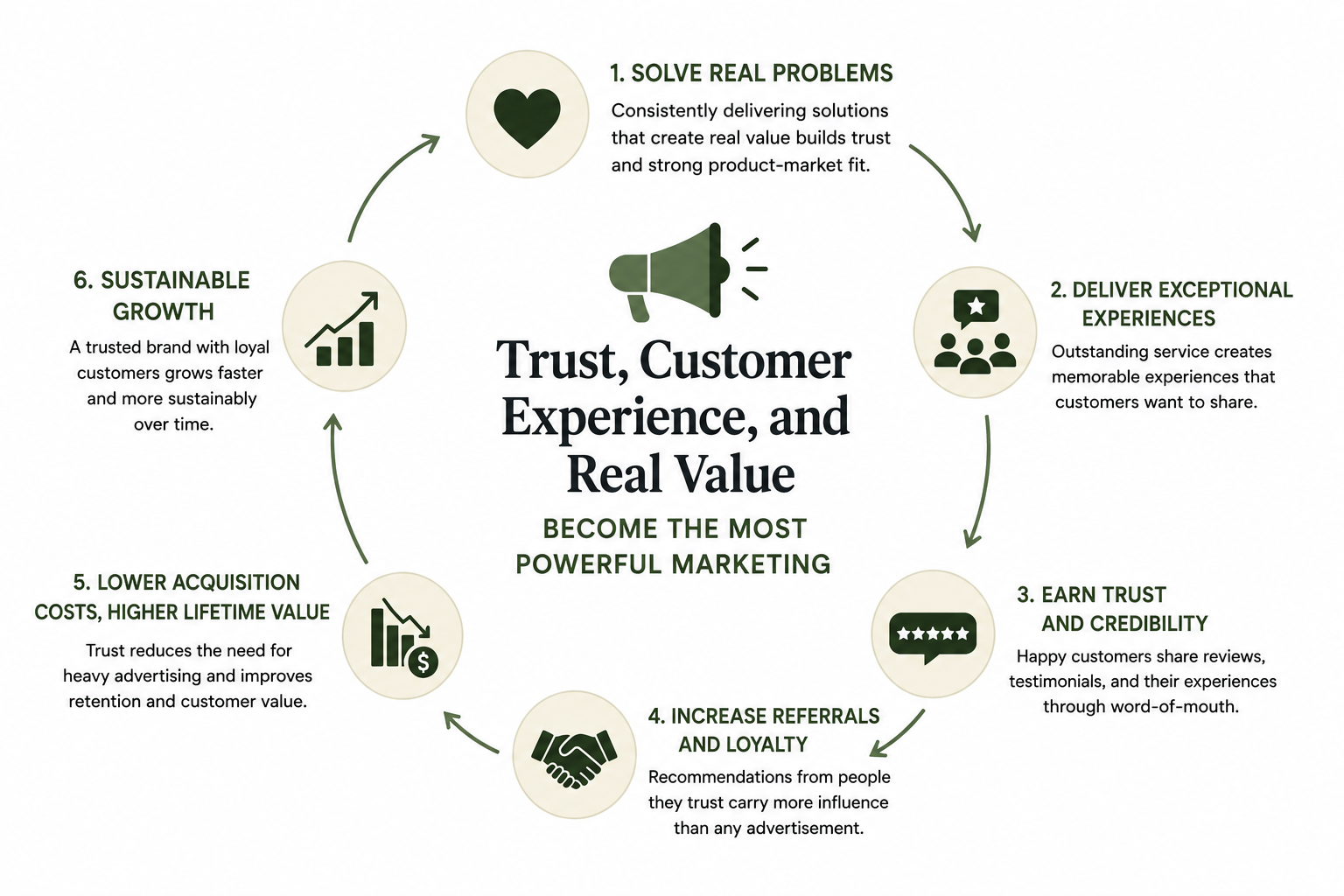
1. Trust, Customer Experience, and Real Value Become the Most Powerful Marketing
Businesses that sustain long-term growth understand that attracting new customers is only part of the equation. Retaining existing customers, creating exceptional experiences, and consistently solving meaningful problems often generate stronger growth than continually increasing advertising budgets.
Word-of-mouth recommendations remain one of the most trusted influences on purchasing decisions because they come with built-in credibility. Customers who receive outstanding service naturally share their experiences through referrals, reviews, testimonials, and conversations with others. These recommendations require far less persuasion than traditional advertising because trust already exists.
Businesses that consistently solve important problems also create stronger product-market fit. Customers willingly recommend products and services that genuinely improve their lives or businesses. Clear differentiation, niche positioning, and active community engagement further strengthen this effect by giving customers specific reasons to choose one business over another.
As trust grows, customer retention improves, referrals increase, and acquisition costs decline. Businesses spend less time convincing prospects because their reputation has already established credibility. Over time, satisfied customers become the business's most effective marketers.
2. Strong Operations Create Growth That Marketing Alone Cannot
Businesses that seem to market less often invest heavily behind the scenes. Instead of focusing exclusively on attracting attention, they build systems that consistently deliver high-quality customer experiences.
Efficient processes help maintain reliable service, clear communication, and consistent quality as the business grows. Employee alignment ensures that marketing, sales, customer service, and operations all contribute to a seamless customer journey. Technology supports scalability by automating routine tasks while allowing employees to focus on delivering exceptional experiences.
Continuous improvement also plays a critical role. Customer feedback, operational reviews, and performance metrics help businesses identify opportunities to refine their products, services, and processes. Lean systems reduce unnecessary friction, improve consistency, and strengthen the company's ability to deliver on its promises.
Rather than relying on marketing to overcome operational weaknesses, these businesses create experiences that naturally reinforce every marketing message they share.
3. Sustainable Growth Compounds Over Time
The businesses that continue growing year after year rarely depend on one successful marketing campaign. Instead, they build systems that allow growth to compound through trust, loyalty, and customer advocacy.
Every satisfied customer creates opportunities for repeat business, referrals, positive reviews, and stronger brand reputation. Businesses that prioritize customer relationships before aggressive expansion develop loyal communities that continue generating new opportunities through authentic recommendations.
Long-term growth also depends on continually reinvesting in employees, systems, products, and customer experiences. Instead of measuring success only through clicks or campaign performance, these businesses focus on customer lifetime value, retention, referrals, and long-term relationships. These metrics encourage decisions that strengthen the business well beyond individual marketing efforts.
Marketing remains an essential driver of awareness, but it produces the greatest results when supported by exceptional delivery. Businesses that consistently create value earn trust that compounds over time, making each new customer easier to acquire than the last.

Conclusion
Many businesses that appear to market less are not growing because they have abandoned marketing. They are growing because years of consistently delivering value have created something even more powerful than constant promotion. Their reputation, customer relationships, and operational excellence continue generating growth long after individual marketing campaigns have ended.
Customer experience often becomes the most effective marketing channel because satisfied customers naturally become advocates. Trust builds with every fulfilled promise, referrals increase through positive relationships, and operational excellence ensures that new customers receive the same high-quality experience that inspired previous recommendations. Over time, these advantages compound, making future growth easier and more sustainable.
Marketing remains essential for building awareness and attracting opportunities, but it is most effective when supported by exceptional delivery. The businesses that grow most consistently are not necessarily those that market the most—they are the ones that consistently give customers reasons to return, recommend them to others, and trust them again in the future. By combining strong marketing with exceptional customer experiences and reliable operations, they create a sustainable cycle of growth powered by the value customers willingly share.
FAQs
1. Can a business really grow without spending heavily on marketing?
Yes. While every business benefits from marketing, sustainable growth does not always require larger advertising budgets. Businesses that consistently deliver value, retain customers, earn referrals, and build strong reputations often generate steady growth through customer advocacy and repeat business rather than relying solely on paid promotion.
2. Why is customer retention more important than constantly finding new customers?
Retaining existing customers is often more cost-effective than acquiring new ones. Loyal customers are more likely to make repeat purchases, recommend your business to others, leave positive reviews, and contribute greater lifetime value, making long-term growth more sustainable.
3. How does customer experience influence business growth?
Customer experience shapes how people perceive your business. Positive experiences encourage repeat purchases, referrals, and stronger trust, while poor experiences can damage your reputation and reduce customer loyalty. Every interaction contributes to future growth opportunities.
4. What role do business systems play in sustainable growth?
Strong systems help businesses deliver consistent quality as they grow. Efficient processes, aligned teams, effective technology, and continuous improvement allow companies to maintain excellent customer experiences without sacrificing reliability or operational efficiency.
5. What is the biggest reason some businesses rely less on constant promotion?
Many successful businesses have built a reputation that generates ongoing referrals and repeat customers. By consistently solving customer problems, delivering on their promises, and investing in long-term relationships, they create a cycle of trust and advocacy that naturally reduces their dependence on continuous marketing campaigns.