
Most businesses strive to create a strong brand, clear messaging, and positive customer experiences. Yet many unintentionally create confusion through small inconsistencies that go unnoticed internally but stand out to customers. As businesses grow, add new channels, teams, and technologies, maintaining consistency becomes increasingly difficult.
Customers interact with businesses across websites, social media, emails, advertisements, sales conversations, and customer support channels. They expect these interactions to feel connected and consistent. When they do, confidence grows. When they do not, uncertainty begins to appear. Even small contradictions can create doubt, increase perceived risk, and weaken trust. Because mixed signals often develop gradually, businesses may not realize they exist until customer confidence and conversions begin to suffer.
1. How Mixed Signals Appear and Why They Matter
Mixed signals often emerge when different teams, channels, or tools communicate different versions of the same message. A business may sound professional on its website, casual on social media, and completely different in its email campaigns. Marketing may promise an experience that customer service or onboarding cannot consistently deliver. Product descriptions, sales conversations, and customer communications may all emphasize different benefits.
Visual branding can contribute to the problem as well. Inconsistent use of colors, imagery, layouts, or messaging can make a business appear less organized and recognizable. AI-generated content can create additional challenges when it does not match the established brand voice.
Customers notice these inconsistencies quickly because they experience the entire journey as one connected experience. When messages conflict, they begin questioning what the business actually stands for and whether it can be trusted.
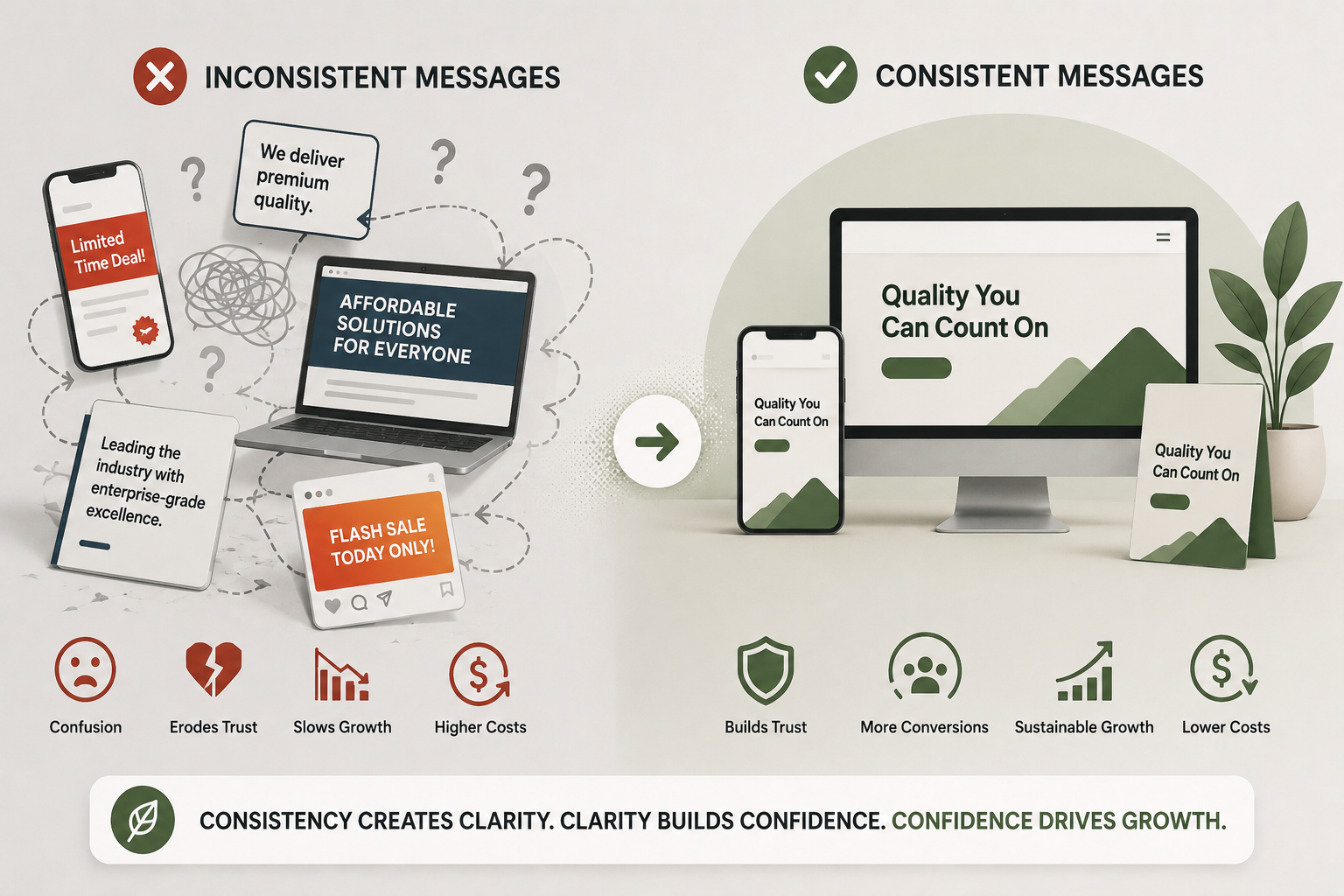
2. How Inconsistency Creates Confusion, Erodes Trust, and Slows Growth
Customers rely on consistency to determine whether a business is credible and reliable. When messages align across every touchpoint, confidence grows because customers know what to expect. When communication feels inconsistent, customers often interpret it as a sign of uncertainty, disorganization, or unreliability.
This confusion increases perceived risk. Customers begin wondering whether promises will be fulfilled, whether product quality will meet expectations, or whether the business can be trusted at all. Even strong products and services can struggle when mixed signals create doubt.
The impact extends beyond trust. Inconsistency can reduce conversions, increase customer churn, weaken marketing effectiveness, and raise customer acquisition costs. Teams may also waste time correcting off-brand content and resolving misunderstandings. Over time, these effects compound, making growth more difficult and expensive.
3. Building Consistency Across Every Customer Touchpoint
Consistency requires intentional management. Businesses must clearly define their messaging, tone of voice, and core value proposition so that every department communicates the same story. Marketing, sales, customer service, and leadership should all be aligned around shared messaging and customer expectations.
Regular audits can help uncover inconsistencies across websites, emails, advertisements, social media content, and customer communications. Simplifying customer-facing language and removing unnecessary jargon also helps create clearer, more consistent experiences.
Employee training plays an important role as well. Team members who understand the company's messaging and customer expectations are far more likely to create aligned experiences. Systems such as brand guidelines, approval processes, and communication templates can help maintain consistency as the business continues to grow.

4. Customer Feedback Reveals the Gaps Businesses Miss
Customers often identify inconsistencies long before businesses do. Because they experience the entire customer journey from beginning to end, they can spot gaps between promises and reality more easily than internal teams.
Feedback, surveys, reviews, support conversations, and customer complaints can provide valuable insight into where expectations and experiences do not align. These moments often reveal hidden sources of confusion that may be weakening trust or slowing conversions.
Businesses that actively listen to customers and use feedback to refine their messaging are better positioned to create consistent experiences that build confidence and reduce uncertainty.
Conclusion
Mixed signals often seem minor internally, but they can have a significant impact on customer trust, conversions, and growth. Customers want clarity, consistency, and confidence. They want to understand what a business stands for, what they can expect, and whether promises will be fulfilled.
When messaging, branding, communication, and customer experiences align, trust grows naturally. Consistency reduces confusion, lowers perceived risk, and makes it easier for customers to move forward with confidence.
Ultimately, consistency is more than a branding exercise. It is a business growth strategy. Businesses that communicate clearly and consistently make it easier for customers to trust them, choose them, and remain loyal over time.
FAQs
1. What are mixed signals in business?
Mixed signals occur when a business communicates inconsistent messages across different customer touchpoints, such as its website, social media, advertising, emails, or customer service interactions. These inconsistencies can create confusion and make it harder for customers to understand what the business stands for.
2. How do mixed signals affect customer trust?
Customers rely on consistency to determine whether a business is credible and reliable. When messaging, branding, or customer experiences conflict with one another, customers may begin questioning the business's professionalism, reliability, and ability to deliver on its promises.
3. What are some common examples of mixed signals?
Common examples include inconsistent branding, conflicting product descriptions, different tones of voice across communication channels, marketing promises that do not match the customer experience, and customer service information that contradicts website content.
4. How can a business identify whether it is sending mixed signals?
Businesses can identify mixed signals by auditing their websites, emails, advertisements, social media content, sales materials, and customer support communications. Customer feedback, reviews, and support inquiries can also reveal areas where messaging and customer experiences are not aligned.
5. What is the best way to create a more consistent customer experience?
The most effective approach is to establish clear messaging guidelines, align teams around a shared brand message, regularly review customer-facing content, and use customer feedback to identify gaps between expectations and actual experiences. Consistency across every touchpoint helps build trust and confidence over time.