
Many businesses invest most of their marketing efforts when prospects are already searching for solutions, requesting quotes, or comparing vendors. While this approach can generate leads, it often overlooks one of the most influential parts of the buying journey. By the time customers begin evaluating different providers, many of their opinions, expectations, and preferences have already been shaped through earlier interactions with content, recommendations, and trusted sources. Businesses that wait until this stage are often competing for attention rather than earning it.
The reality is that buyers spend much of their journey before they are ready to make a purchase. Long before they actively search for a product or service, they are identifying challenges, learning about possible solutions, and forming impressions about the businesses they encounter. During this period, they are deciding which companies appear knowledgeable, trustworthy, and worth remembering. Those early impressions often influence future purchasing decisions more than businesses realize.
This is why demand is created long before comparisons begin. Businesses that educate prospects while they are still exploring ideas or recognizing problems build familiarity and credibility before any buying conversation starts. Helpful insights and consistent visibility make the business feel more trustworthy long before competitors enter the picture.
Ultimately, businesses that educate first often become the preferred choice later. By helping customers understand their challenges before selling solutions, they create trust that continues growing throughout the buying journey. When prospects are finally ready to compare options, they are often choosing between businesses they already know rather than discovering brands for the first time.
1. Why Early Awareness Creates Demand
Many businesses assume the buying journey begins when a prospect starts comparing vendors, but that stage represents only a small portion of the customer's decision-making process. Long before customers actively evaluate providers, they spend weeks or months learning about their challenges, researching possible approaches, and forming opinions about the businesses they encounter. Marketing that begins only during the comparison stage is reactive because it enters the conversation after many important perceptions have already been established.
During this early period, buyers are often consuming educational content, reading industry news, asking questions, and paying attention to businesses that consistently provide useful insights. Although they may not be ready to purchase, every helpful interaction contributes to familiarity and credibility. Businesses that consistently educate their audience become associated with expertise because they help customers understand problems instead of immediately trying to sell products or services.
Showing up only when customers begin comparing vendors limits a company's influence over the decision. At that point, prospects are primarily evaluating prices, features, and differences between providers. Businesses that invested earlier in educating and building familiarity enter this stage with a significant advantage because customers already recognize and trust them before comparisons even begin.
2. Creating Demand Through Education and Positioning
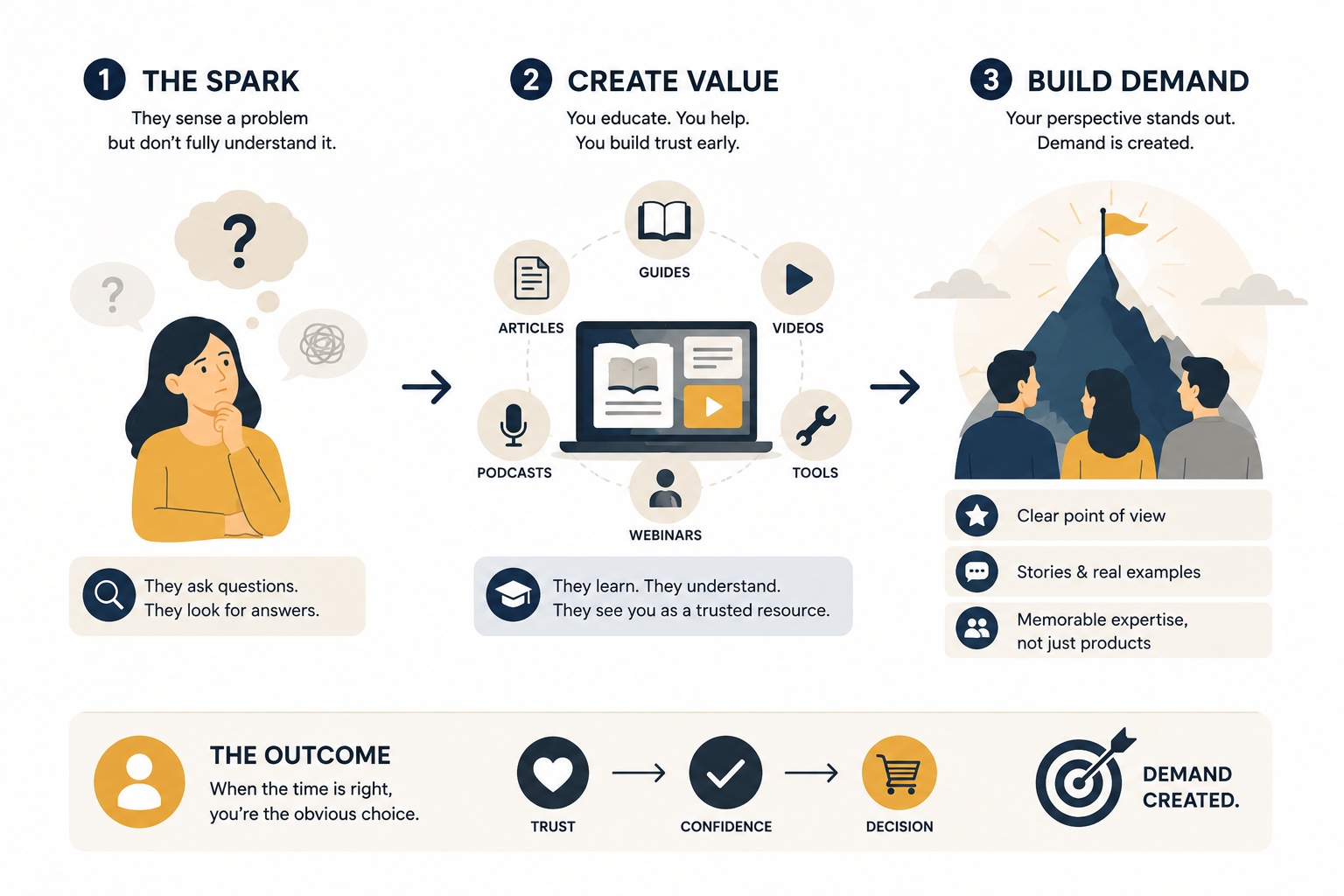
Demand often begins when customers first encounter a challenge they cannot fully define. At this stage, they are trying to understand why a problem exists and whether it deserves attention. Businesses that help prospects answer those questions position themselves as trusted resources long before competitors become visible.
Educational content is one of the most effective ways to create this early demand. Articles, guides, webinars, videos, podcasts, and interactive tools help prospects identify problems, answer important questions, and better understand their situations. Instead of immediately promoting products, businesses become valuable sources of knowledge that make future buying decisions feel more informed and less risky.
Strong positioning further strengthens demand by communicating a clear perspective instead of generic messaging. Businesses that consistently express a unique point of view become easier to remember because customers associate them with meaningful expertise rather than simply the products they sell. Stories, customer experiences, and real-world examples also make problems more relatable, helping prospects recognize similar challenges in their own situations long before an urgent need arises.
3. Building Trust That Lasts Throughout the Buying Journey
Trust develops through repeated value rather than repeated promotion. Every helpful article, customer story, educational video, or practical resource strengthens familiarity and credibility, making prospects more comfortable with a business long before they become active buyers.
Consistent visibility keeps businesses present throughout the customer's learning process instead of appearing only during promotional campaigns. Customer stories, testimonials, case studies, and demonstrated expertise reinforce that familiarity with proof, giving prospects confidence that similar customers have already achieved positive outcomes. Together, education and proof reduce uncertainty before any sales conversation takes place.
Businesses also build stronger trust by creating content that matches different stages of the buying journey. Early-stage educational resources build awareness, while more detailed guides, comparisons, and practical examples support prospects as they move closer to making a decision. Search insights, customer questions, and sales feedback help identify the topics customers care about most, allowing businesses to create content that addresses genuine concerns. Self-service resources such as knowledge centers, downloadable guides, assessments, and product demonstrations further strengthen confidence by allowing prospects to explore independently and learn at their own pace.
4. Turning Early Demand Into Long Term Competitive Advantage
Creating demand before prospects begin comparing options produces benefits that continue growing over time. Businesses that consistently educate their audience, build trust, and remain visible spend less effort competing for attention later because they have already earned credibility before purchasing decisions begin. Instead of constantly introducing themselves to new prospects, they continue relationships that have been developing through valuable content and ongoing engagement.
Existing trust also shortens buying decisions because customers already believe the business understands their challenges. Rather than spending significant time verifying credibility or comparing every available alternative, they can focus on determining whether the solution fits their needs. Businesses that have established authority are also evaluated more on the value they provide than on price alone because buyers remember the companies that helped them before asking for a sale.
Maintaining this advantage requires consistency across marketing, sales, and customer experience. Every interaction should reinforce the same message and deliver on the promises made earlier in the buying journey. Over time, every article, webinar, customer success story, video, and educational resource contributes to a reputation that attracts future opportunities. Businesses that consistently invest in creating demand build momentum that becomes increasingly difficult for competitors to replicate.
Conclusion
Many businesses believe they win customers through the best proposal, the lowest price, or the strongest sales presentation. In reality, many buying decisions are influenced long before prospects request quotes or compare vendors. Customers begin forming opinions while they are identifying problems, seeking information, and deciding which businesses appear knowledgeable and trustworthy.
Early education creates familiarity, trust, and authority that continue influencing future decisions. Businesses that consistently help customers understand challenges, provide valuable insights, and demonstrate expertise become trusted resources rather than simply another option in the marketplace. They also face less direct competition because they become part of the customer's learning journey long before purchasing becomes necessary.
Consistently creating value keeps businesses visible throughout the buying journey and allows them to remain top of mind until customers are ready to act. Rather than chasing existing demand, they create it through education, trust, and meaningful relationships. The businesses that grow most predictably are often those that begin winning customers long before comparisons ever take place.
FAQs
1. Why is it important to create demand before customers are ready to buy?
Creating demand early allows businesses to build awareness, trust, and credibility before prospects begin comparing vendors. When customers are ready to purchase, they are more likely to choose brands they already recognize and trust rather than starting their search from scratch.
2. How can educational content help generate demand?
Educational content helps potential customers understand their problems, explore possible solutions, and make more informed decisions. Articles, guides, videos, webinars, and other resources position your business as a trusted expert while building relationships long before a sales conversation begins.
3. What is the difference between demand generation and lead generation?
Demand generation focuses on creating awareness and interest before customers are actively shopping, while lead generation focuses on converting people who have already shown buying intent. Demand generation builds future opportunities, whereas lead generation captures existing demand.
4. Why does early trust reduce price competition?
When customers already trust a business because of its expertise, helpful content, and consistent value, they are less likely to base their decisions solely on price. Established credibility shifts the conversation toward outcomes and value rather than direct cost comparisons.
5. How can businesses stay top of mind throughout the buying journey?
Businesses can remain memorable by consistently publishing valuable content, sharing customer success stories, answering common questions, and maintaining a helpful presence across multiple channels. Regularly providing useful information keeps the brand familiar until prospects are ready to make a purchasing decision.