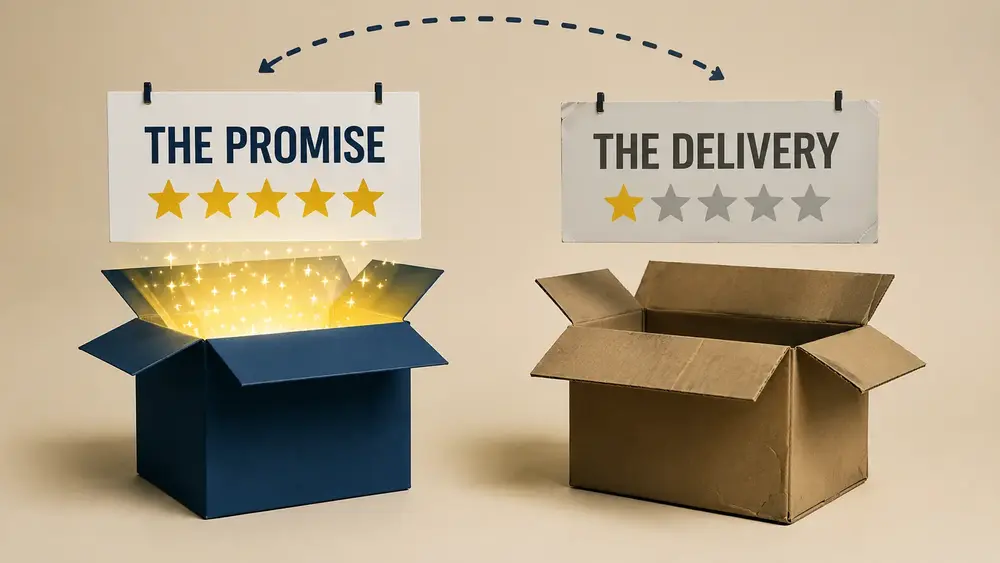
Marketing plays a critical role in attracting attention and shaping customer expectations. Through websites, advertisements, social media content, and sales conversations, businesses communicate what customers can expect to receive. However, marketing only creates the expectation. The client experience determines whether that expectation is fulfilled.
Customers naturally compare what was promised with what actually happens. When reality matches the promise, confidence grows because the business appears trustworthy and reliable. When the experience falls short, disappointment follows. Even small gaps between expectation and reality can create doubt, weaken trust, and influence how customers view the entire business.
The consequences extend beyond customer satisfaction. Broken promises can damage reputation, increase customer churn, reduce referrals, lower employee morale, and slow long-term growth. Businesses that grow sustainably understand that marketing and client experience must work together. The strongest brands consistently deliver the experiences their marketing promises.
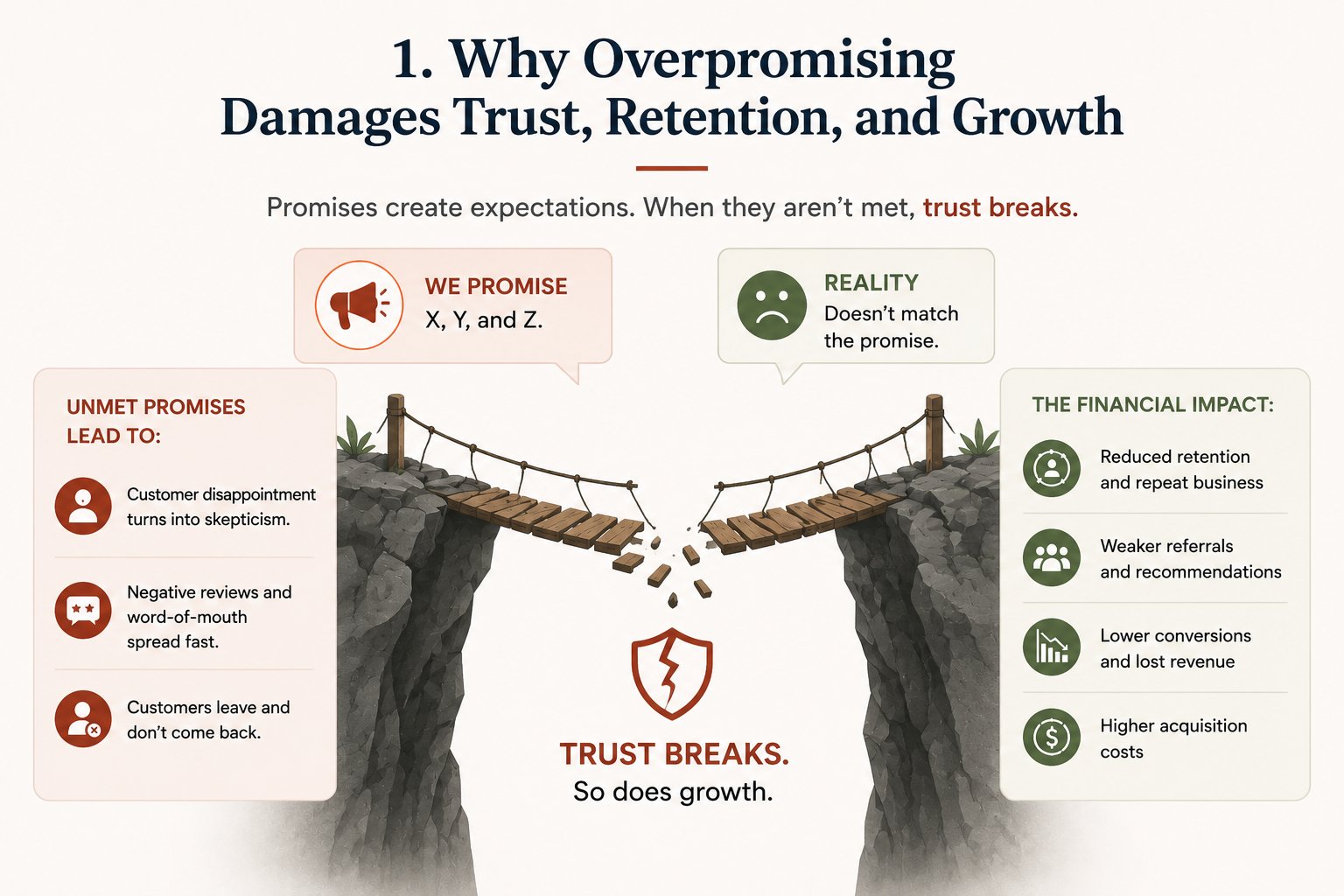
1. Why Overpromising Damages Trust, Retention, and Growth
Every marketing message creates expectations that customers use to evaluate a business. When those expectations are not met, trust begins to erode. Customers often interpret unmet promises as a sign that they were misled, causing disappointment to evolve into skepticism. What starts as a single negative experience can quickly influence how customers view the business as a whole.
This loss of trust affects far more than one customer relationship. Disappointed customers are less likely to return, recommend the business to others, or believe future marketing claims. Negative reviews, social media discussions, and word-of-mouth referrals can spread quickly, making it harder to attract new customers and maintain credibility.
The financial impact can be significant. Reduced customer retention, weaker referrals, declining conversion rates, and higher customer acquisition costs all make growth more difficult. Businesses that consistently align expectations with delivery create stronger loyalty and more sustainable growth because trust continues to build over time.
2. The Hidden Internal Costs and Root Causes of Overpromising
Overpromising affects employees as much as customers. Customer-facing teams are often left managing complaints, frustrations, and expectations created by promises they did not make. Support, onboarding, and delivery teams may experience increased workloads and pressure when expectations exceed operational reality, creating stress and increasing the risk of burnout.
These challenges often originate from several common gaps within the organization. Messaging may promise outcomes that do not consistently reflect reality. Operational capacity may struggle to keep pace with demand. Expectations may not be clearly managed, causing customers to anticipate more than the business can realistically deliver.
Departmental silos can make the problem worse. Marketing, sales, operations, and customer service teams may work toward different objectives without fully understanding one another's limitations. Cultural factors can also contribute when short-term growth goals take priority over long-term customer experience. In most cases, businesses do not intentionally overpromise; these gaps simply develop over time as organizations grow and become more complex.
3. Aligning Marketing and Client Experience
The solution is not weaker marketing. It is stronger alignment. Businesses build trust when every promise made through marketing is supported by a client experience capable of consistently delivering on it.
One of the most effective ways to achieve this is by grounding marketing claims in proven results rather than aspirational messaging. Marketing, sales, product, operations, and customer support teams should collaborate to ensure that customer expectations accurately reflect what the business can deliver. Stress-testing fulfillment capabilities before launching campaigns can help identify potential gaps before customers experience them.
Transparency also plays a critical role. Customers appreciate businesses that communicate honestly about timelines, processes, and potential limitations. Creating shared goals across departments further strengthens alignment by encouraging teams to prioritize customer satisfaction and long-term value rather than isolated performance metrics.
Most importantly, businesses that cultivate a customer-centric culture create stronger relationships because every department becomes responsible for delivering the experience customers were promised. When marketing and client experience work together, trust becomes easier to earn and maintain.

Conclusion
Marketing may attract customers, but client experience determines whether trust survives. Customers remember whether expectations were fulfilled, whether promises matched reality, and whether the experience delivered the value they were led to expect.
Overpromising can generate short-term attention, but it often creates long-term damage when expectations consistently exceed reality. Trust, loyalty, and reputation are built through reliable delivery rather than persuasive messaging alone. Every fulfilled promise strengthens credibility, while every broken promise creates doubt that can be difficult to reverse.
The businesses that grow most successfully understand that marketing and client experience are part of the same customer journey. Marketing establishes expectations, and client experience validates them. When both are aligned, customers gain confidence, relationships become stronger, and growth becomes more sustainable.
Ultimately, the strongest brands are not the ones that promise the most. They are the ones that consistently deliver on what they promise.
FAQs
1. What does it mean when marketing overpromises?
Marketing overpromises when a business creates expectations that its products, services, or customer experience cannot consistently fulfill. This often leads to customer disappointment because the reality does not match what was advertised.
2. How does overpromising affect customer trust?
When customers feel that a business has failed to deliver on its promises, trust begins to decline. Even small gaps between expectations and reality can make customers question future claims and reduce their confidence in the business.
3. Can overpromising hurt customer retention?
Yes. Customers who feel misled are less likely to return, renew, or make repeat purchases. Unmet expectations can increase customer churn and make it harder to build long-term loyalty and advocacy.
4. Why do businesses accidentally overpromise?
Many businesses overpromise unintentionally due to misalignment between marketing, sales, operations, and customer service teams. Growth pressures, unclear communication, and unrealistic expectations can create gaps between what is promised and what can actually be delivered.
5. How can businesses align marketing promises with customer experience?
Businesses can improve alignment by setting realistic expectations, basing marketing claims on proven results, involving operational teams in campaign planning, and regularly reviewing customer feedback. Consistent communication and reliable delivery help ensure that promises match reality.