Many business owners believe customers choose the company with the best product, the lowest price, or the biggest marketing budget. While those factors can influence buying decisions, they are rarely the main reason one business consistently wins over another. Long before customers begin comparing products or requesting quotes, they have already formed impressions about the businesses they recognize, trust, and remember.
Familiarity plays a powerful role in those decisions. Customers naturally feel more comfortable choosing businesses they have encountered through helpful content, consistent messaging, positive recommendations, and ongoing visibility. Every valuable interaction builds recognition, trust, and confidence, making the business feel more credible before any buying conversation begins.
Trust develops gradually through educational content, customer success stories, reliable communication, and consistent experiences. Businesses that continue showing up with value throughout the customer journey become easier to remember and easier to trust when the need finally arises. Instead of competing only at the point of purchase, they establish preference long before customers begin evaluating alternatives.
Ultimately, becoming the obvious choice is not about luck or simply offering a better product. It comes from intentionally building familiarity, credibility, and clear positioning over time. Businesses that consistently educate, communicate clearly, and remain visible create stronger customer preference and make buying decisions feel easier and more confident.
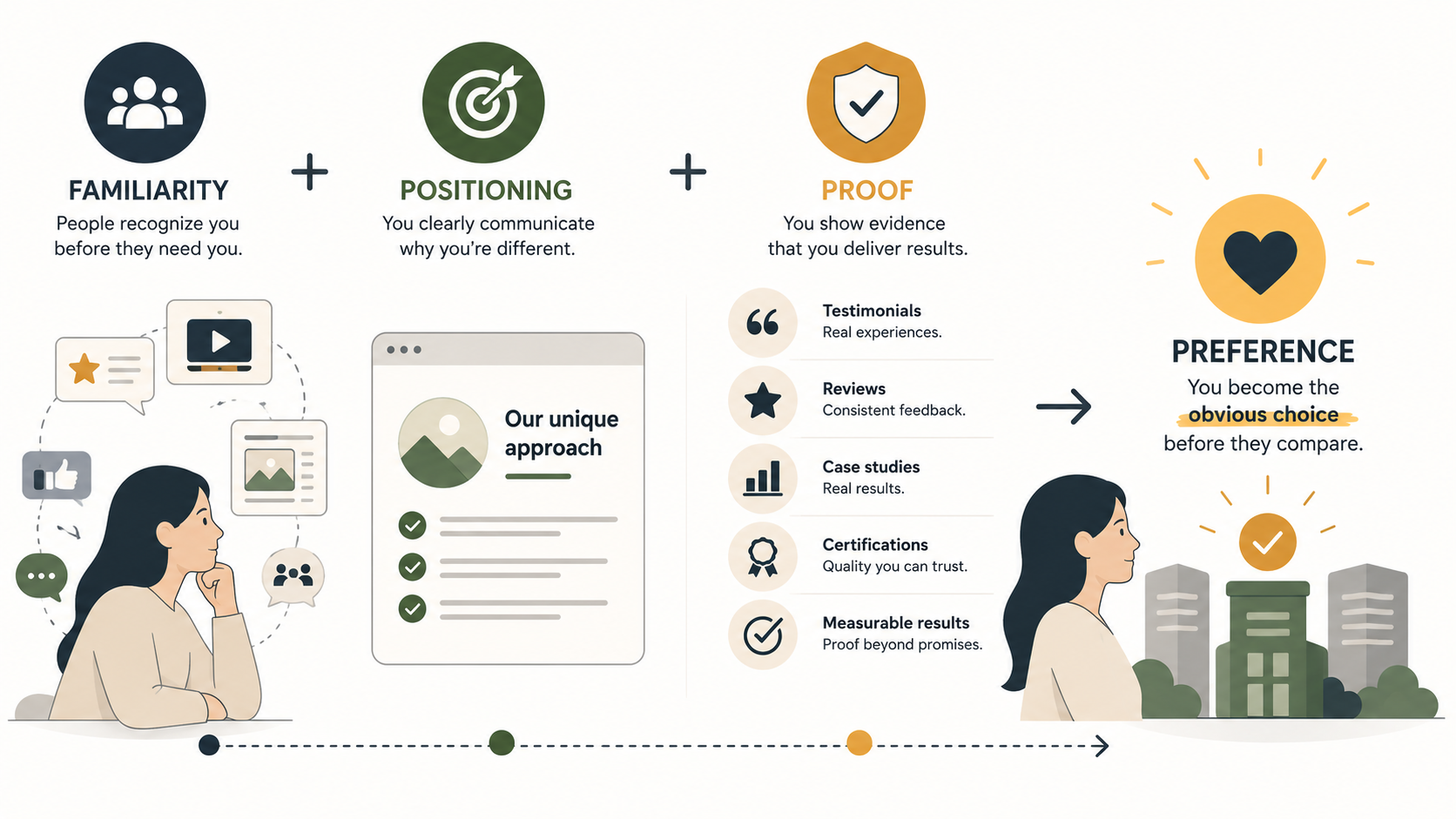
1. Familiarity, Positioning, and Proof Create Preference
Customers are far more likely to choose businesses they already recognize. Repeated exposure through articles, videos, recommendations, social media, and other helpful interactions steadily increases familiarity, making a business feel more trustworthy before customers actively begin shopping. Rather than discovering new companies during the buying process, many customers start by considering the businesses they already know because familiarity reduces uncertainty and perceived risk.
Familiarity alone, however, is not enough. Businesses also need clear positioning that explains why they are different. Generic claims about quality or customer service rarely stand out because competitors make similar promises. Instead, businesses become easier to choose when they communicate a specific understanding of customer problems, explain their unique approach, and provide meaningful reasons why their solution delivers greater value.
Proof strengthens this positioning even further. Testimonials, customer reviews, case studies, measurable results, certifications, and real success stories provide evidence that the business consistently delivers on its promises. Instead of relying on marketing claims alone, customers see proof that similar people have already achieved positive outcomes. Together, familiarity, positioning, and proof create the confidence that makes one business feel like the obvious choice before comparisons even begin.
2. Why Consistency Builds Stronger Trust Than Promotion
Promotional campaigns can attract attention, but trust is built through consistent value over time. Businesses that regularly publish educational content, answer customer questions, and provide helpful resources gradually establish themselves as reliable experts rather than occasional advertisers. Every positive interaction reinforces previous ones, making the business easier to remember and increasing confidence long before customers are ready to buy.
Consistency should extend across every customer touchpoint. Websites, social media, emails, sales conversations, and customer support should communicate the same message while reinforcing the same values and expertise. This creates a reliable experience that strengthens credibility because customers know what to expect regardless of where they interact with the business.
Remaining visible even when customers are not actively searching also creates a significant advantage. Many buying decisions begin weeks or months after someone first encounters a business. Companies that consistently provide value stay top of mind throughout that journey, allowing trust to grow naturally through repeated exposure instead of relying on occasional promotional campaigns.
3. Building a Business That Customers Naturally Choose
Businesses become the preferred choice by building trust before customers need their products or services. Educational content, helpful resources, customer success stories, and valuable insights create awareness that continues growing throughout the buying journey. When customers eventually begin evaluating solutions, they already recognize businesses that have consistently helped them understand their challenges and possible solutions.
This advantage becomes even stronger when branding, marketing, customer experience, and reputation all reinforce the same message. Consistent communication and reliable experiences create confidence because customers see the same promises reflected across every interaction. Rather than relying on short-term promotions, successful businesses steadily strengthen their reputation through dependable execution and ongoing value.
Long-term success also depends on measuring more than immediate sales. Customer trust, brand recognition, referrals, repeat business, and overall reputation provide stronger indicators of whether a business is becoming the obvious choice. Organizations that continually invest in these long-term assets create customer preference that competitors find increasingly difficult to overcome.
Conclusion
Customers rarely choose businesses based only on price or product features. More often, they choose businesses they already recognize, trust, and remember. Familiarity reduces uncertainty, clear positioning explains why a business is different, and proof reinforces confidence that the business can deliver on its promises.
Consistent visibility keeps businesses top of mind throughout the customer journey, allowing trust to develop long before buying decisions begin. Rather than competing only when customers are actively comparing options, successful businesses create lasting preference through valuable content, reliable experiences, and meaningful customer relationships.
Ultimately, the businesses that become the obvious choice are those that invest consistently in being remembered. By building familiarity, credibility, and trust over time, they make purchasing decisions easier for customers while creating stronger loyalty, greater differentiation, and more sustainable long-term growth.

FAQs
1. Why do some businesses become the obvious choice for customers?
Businesses become the obvious choice by consistently building familiarity, trust, and credibility before customers are ready to buy. Through clear positioning, valuable content, and positive customer experiences, they create confidence that makes choosing them feel easier than evaluating unfamiliar alternatives.
2. How does familiarity influence customer buying decisions?
Familiarity reduces perceived risk and increases confidence. Customers are naturally more comfortable choosing businesses they have seen consistently through educational content, recommendations, reviews, or repeated positive interactions because those businesses feel more trustworthy and reliable.
3. Why is clear positioning important for standing out from competitors?
Clear positioning helps customers quickly understand what makes a business different and why it is the right choice for their needs. Businesses that communicate specific value and demonstrate a deep understanding of customer problems are often easier to remember and more likely to earn trust than those using broad, generic marketing messages.
4. What role do testimonials and case studies play in building trust?
Testimonials, reviews, and case studies provide social proof that a business has successfully helped other customers. They reinforce credibility by showing real results, reducing uncertainty, and giving potential buyers greater confidence that they can expect similar outcomes.
5. How can a business become the preferred choice without competing on price?
Businesses can reduce price competition by consistently educating their audience, communicating a unique value proposition, providing proof of their expertise, and delivering reliable customer experiences. Over time, these efforts build trust and recognition, making customers choose the business based on confidence and value rather than price alone.