.webp)
Many businesses assume that interest naturally leads to bookings, but that is rarely how customer behavior works. A prospect may click through a website, ask questions, or even begin the booking process, yet still leave without committing. In most cases, this hesitation is not caused by lack of interest. Instead, it happens because something in the experience creates uncertainty, friction, or doubt at the moment where clients are expected to take action.
Booking is a psychological decision as much as a practical one. Before committing, clients begin evaluating risk: “Will this actually help me?” “Is this worth the cost?” “Am I making the right choice?” Even small gaps in the customer experience — unclear pricing, weak testimonials, confusing forms, or slow communication — can interrupt momentum and prevent interested prospects from following through.
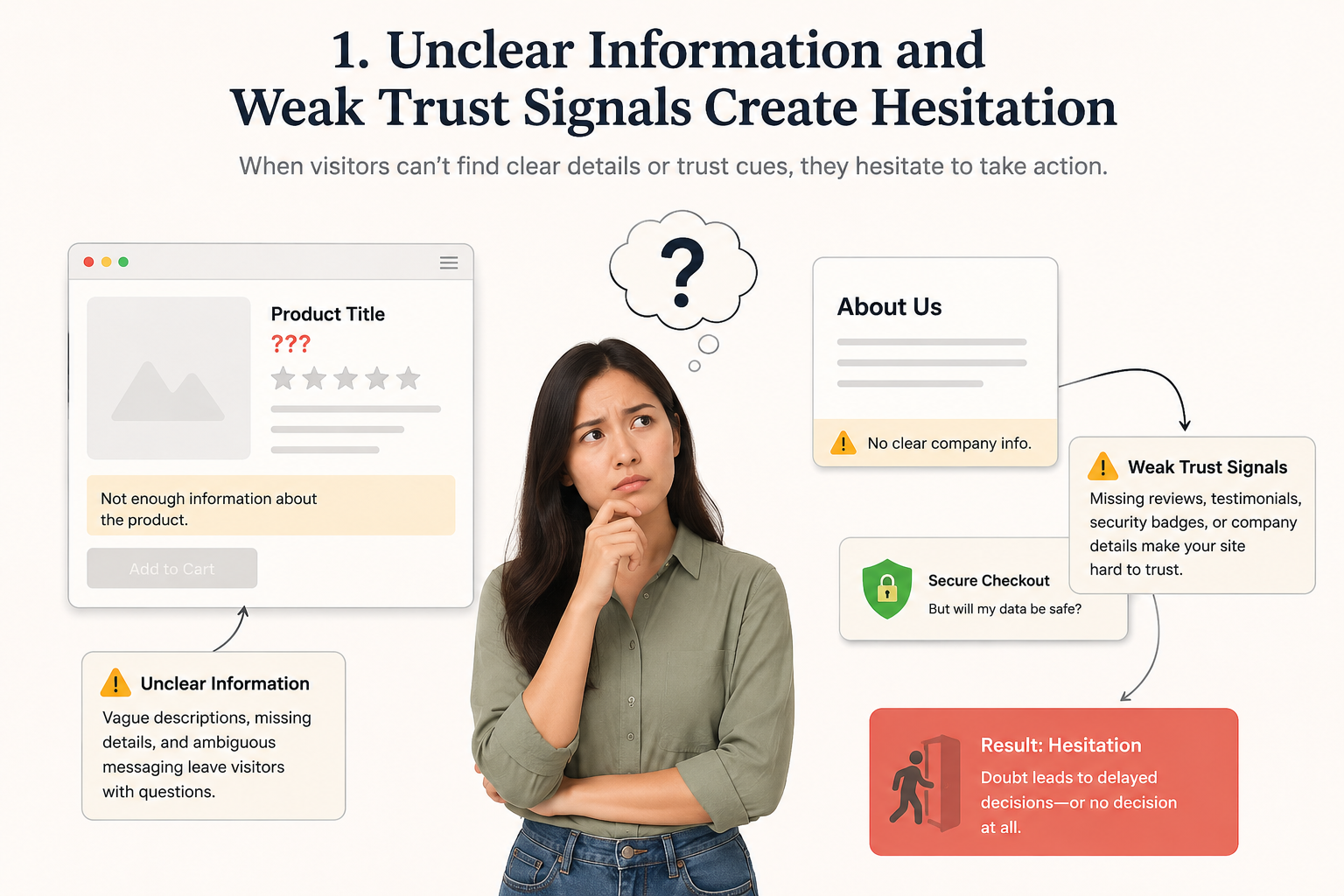
1. Unclear Information and Weak Trust Signals Create Hesitation
One of the biggest reasons clients hesitate is uncertainty. When businesses fail to communicate clear pricing, service details, timelines, or expected outcomes, prospects are left filling in the gaps themselves. Questions about hidden costs, unclear deliverables, or vague promises naturally increase doubt and make booking feel emotionally risky.
Trust signals also play a major role in reducing hesitation. Testimonials, reviews, case studies, and visible proof of results reassure clients that the business is credible and capable of delivering what it promises. Without social proof, prospects are forced to rely only on marketing claims, which often increases skepticism instead of confidence.
People are far more likely to book when they feel informed and reassured. Transparency reduces perceived risk, while strong trust signals help clients feel safer making the decision to move forward.
2. Friction in the Booking Process Causes Last-Minute Drop-Offs
Many businesses lose clients not because prospects are uninterested, but because the booking process itself feels frustrating or overwhelming. Long forms, unclear calls-to-action, hidden availability, or too many steps can interrupt momentum and create enough friction for people to abandon the process entirely.
Every additional step increases the possibility of hesitation. Clients expect convenience, especially online, and even small inconveniences can weaken purchase intent. If visitors are unsure what happens next or how to complete the booking, they are far more likely to postpone the decision or leave altogether.
Smooth booking experiences help maintain momentum by making the process feel simple, fast, and easy to understand. Short forms, clear instructions, visible availability, and immediate confirmations reduce effort while increasing confidence. The easier the experience feels, the more likely prospects are to move naturally from interest to action.
3. Poor Follow-Up Weakens Buyer Momentum
Even highly interested prospects can lose momentum without proper follow-up. Attention fades quickly, especially in digital environments filled with distractions and competing options. Slow replies, missing confirmations, or lack of reminders can create uncertainty and give clients time to second-guess their decision.
Fast, personalized communication helps maintain trust because it reassures prospects that the business is organized, attentive, and reliable. Confirmation emails, reminder messages, and next-step guidance all help reinforce commitment while reducing no-shows and abandoned bookings.
Follow-up systems also keep clients emotionally engaged throughout the decision-making process. Businesses that consistently communicate after the initial inquiry are far more likely to turn interest into confirmed bookings because they maintain momentum instead of allowing uncertainty to grow.
4. High-Converting Booking Systems Reduce Risk and Increase Confidence
The most effective booking systems do more than collect appointments — they create confidence. High-converting businesses understand that booking is not just a transaction; it is a psychological decision where clients evaluate trust, effort, and perceived risk all at once.
Strong booking systems combine clarity, trust, and convenience. Clients need to understand exactly what they are getting, why it is valuable, and how the process works from start to finish. Clear pricing, visible testimonials, straightforward calls-to-action, and specific offers all help reduce uncertainty during the decision-making process.
Convenience is equally important. Smooth booking experiences maintain momentum by removing unnecessary friction through short forms, real-time availability, fast confirmations, and mobile-friendly experiences. Businesses that simplify every stage of the booking journey often increase conversions significantly because the process feels easier and less emotionally risky.
When messaging, trust signals, and booking systems align, clients feel more confident moving forward. Great booking experiences do not just make appointments easier — they make decisions feel safer.
Conclusion — Clients Book When the Process Feels Safe and Clear
When potential clients hesitate before booking, the issue is usually not lack of interest — it is uncertainty, friction, or lack of reassurance during the final stages of decision-making. Businesses that reduce confusion, improve trust, and simplify the booking process create experiences that feel safer and easier to commit to.
Transparency, strong social proof, smooth booking systems, and consistent follow-up all work together to lower perceived risk and increase confidence. When clients clearly understand the value being offered and feel guided through the process, hesitation naturally decreases.
Ultimately, clients are far more likely to book when the experience feels simple, trustworthy, and low-risk. Businesses that focus on creating clarity and confidence often discover that improving conversions is less about attracting more people and more about helping interested prospects feel comfortable enough to finally say yes.
FAQs
1. Why do potential clients hesitate before booking?
Potential clients usually hesitate because of uncertainty, weak trust signals, confusing booking processes, or lack of clear information. Even interested buyers may delay action when the experience feels risky or unclear.
2. How can businesses reduce booking hesitation?
Businesses can reduce hesitation by simplifying the booking process, providing transparent pricing and service details, adding testimonials and reviews, and improving follow-up communication with confirmations and reminders.
3. Why are testimonials and reviews important before booking?
Testimonials and reviews act as social proof. They reassure potential clients that other people have already trusted the business and achieved positive results, which helps reduce skepticism and increase confidence.
4. What booking process mistakes commonly cause drop-offs?
Long forms, unclear calls-to-action, hidden pricing, slow response times, confusing navigation, and lack of follow-up are some of the most common reasons prospects abandon bookings before completing them.
5. How does follow-up communication improve booking conversions?
Fast replies, confirmation emails, reminders, and personalized follow-ups help maintain momentum after initial interest. Strong communication reassures clients, keeps appointments top of mind, and reduces the chances of lost leads or no-shows.