


Not all leads enter the buying process with the same level of awareness, trust, urgency, or confidence. Some are actively searching for a solution and are nearly ready to buy, while others are still trying to understand their problem or evaluate their options. As a result, the amount of convincing required can vary significantly.
Hesitation is not always a sign of disinterest. More often, it reflects uncertainty. Leads may be unsure whether they need a solution, whether the investment is worthwhile, or whether a business can deliver on its promises. The most successful companies recognize that improving conversions is not about pushing harder. It is about understanding what is preventing a lead from moving forward and providing the clarity, reassurance, or support they need.
1. Buying Readiness and Risk Shape Decision-Making
One of the biggest factors influencing how much convincing a lead requires is where they are in the buying journey. Early-stage leads often need education because they are still identifying their problem, while decision-stage leads typically need reassurance that they are making the right choice.
Perceived risk also plays a major role. Customers worry about wasting money, choosing the wrong provider, or failing to achieve the results they want. The greater the perceived risk, the more confidence they need before taking action. Reviews, testimonials, case studies, guarantees, and demonstrated expertise help reduce uncertainty and build trust. In many cases, leads are not questioning the solution itself—they are questioning whether they can trust the business behind it.
2. Personal Circumstances and Buying Styles Create Different Barriers
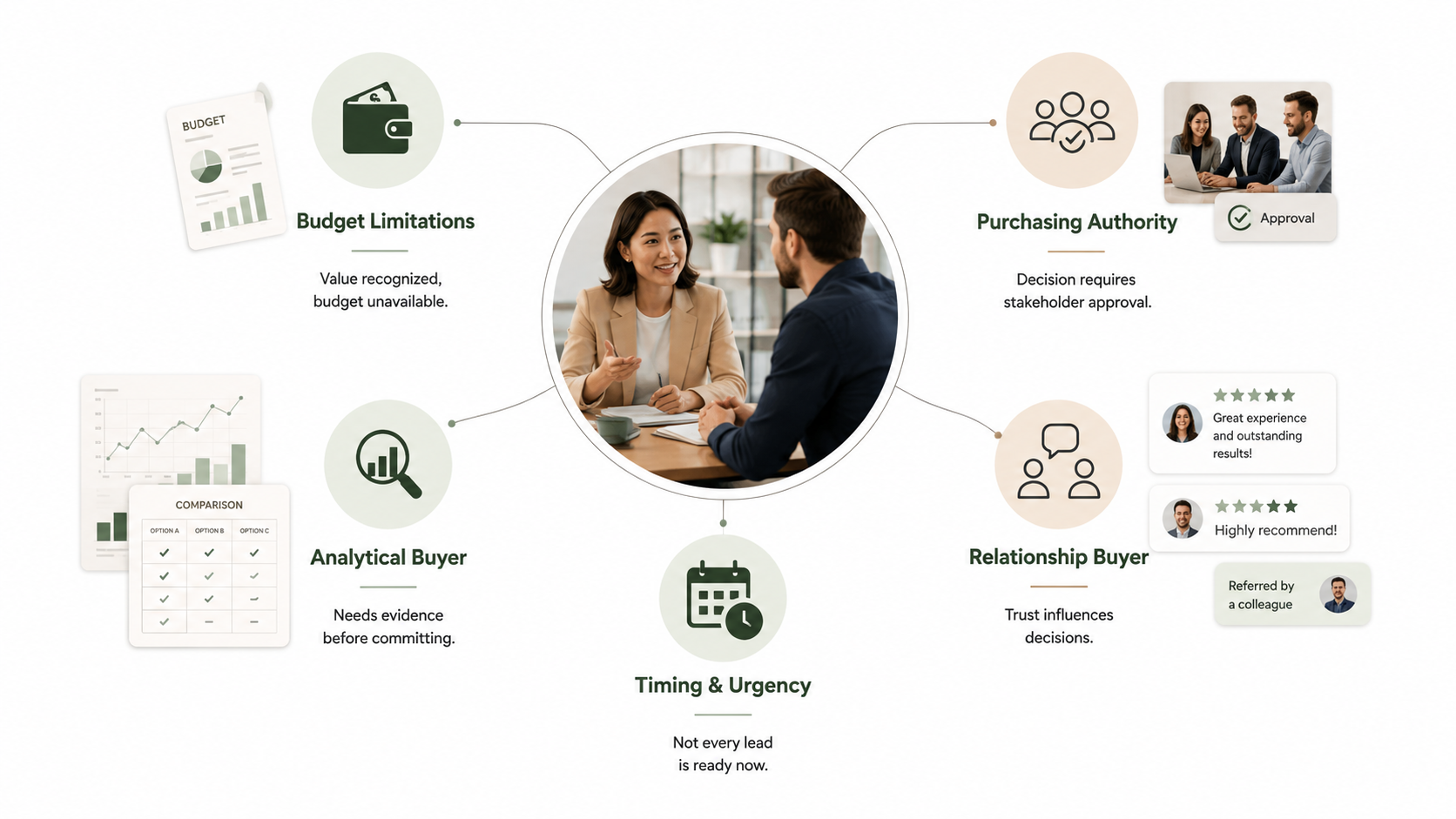
Not every obstacle is related to the offer. Budget limitations, purchasing authority, timing, and urgency often influence whether a lead is ready to move forward. Someone may see the value in a solution but still be unable to buy because of factors outside their control.
People also make decisions differently. Analytical buyers often prefer detailed information, comparisons, and evidence before committing. Relationship-focused buyers may rely more heavily on trust, referrals, and personal reassurance. Because every lead approaches decisions differently, a single sales approach rarely works for everyone. Understanding individual circumstances helps businesses address the real reasons behind hesitation.
3. Mental Friction and Complexity Slow Conversions
Many leads hesitate because the buying process feels more complicated than it needs to be. Too much information, confusing offers, unclear next steps, and complex processes can overwhelm prospects and create decision fatigue. Even interested buyers may delay action when moving forward feels difficult.
Businesses often assume they need stronger persuasion when the real solution is reducing friction. Simplified offers, clear communication, straightforward processes, and obvious next steps help customers feel more confident and make decisions more easily. In many situations, removing complexity is more effective than increasing sales pressure.
4. The Best Businesses Build Confidence Instead of Applying Pressure
The most effective businesses understand that different barriers require different solutions. Some leads need education, while others need reassurance, evidence, or guidance. Rather than using the same approach for everyone, successful businesses tailor their communication to the specific concerns each lead has.
Educational content helps early-stage buyers. Social proof and guarantees reduce perceived risk. Detailed evidence supports analytical decision-makers, while clear guidance helps overwhelmed prospects move forward. The goal is not to pressure people into making a decision but to remove uncertainty and provide the confidence they need to take the next step.
Conclusion
Most leads do not need more persuasion. They need confidence that they are making the right decision. Buying stage, perceived risk, trust, personal circumstances, and mental friction all influence how comfortable someone feels moving forward.
The businesses that convert most effectively are not the ones that push the hardest. They are the ones that identify the real source of hesitation and address it directly. By reducing uncertainty, simplifying decisions, and building trust, they make it easier for leads to say yes. Ultimately, successful sales are not about convincing every lead more—they are about helping every lead feel confident enough to move forward.
FAQs
1. Why do some leads need more convincing than others?
Leads enter the buying process with different levels of awareness, trust, urgency, and confidence. Some are ready to make a decision, while others are still learning about their problem, evaluating options, or assessing potential risks. As a result, each lead requires a different level of information and reassurance before moving forward.
2. Is hesitation always a sign that a lead is not interested?
No. In many cases, hesitation is caused by uncertainty rather than a lack of interest. Leads may be unsure about the value of the solution, concerned about making the wrong choice, or unclear about what happens next. Addressing these concerns often helps move the conversation forward.
3. How does trust affect a lead's decision-making process?
Trust reduces perceived risk and makes decisions easier. When leads see reviews, testimonials, case studies, or evidence of expertise, they gain confidence that a business can deliver on its promises. The more trust a lead has, the less convincing is typically required.
4. Why do some interested leads still delay making a purchase?
A lead may be interested but face barriers unrelated to the product or service itself. Budget limitations, lack of decision-making authority, competing priorities, timing issues, or internal approval processes can all delay a purchase even when interest is high.
5. What's the best way to convert hesitant leads?
The most effective approach is to identify the specific reason behind their hesitation. Some leads need education, others need proof, reassurance, or a simpler buying process. Businesses that focus on building confidence and removing barriers generally achieve better results than those that rely on pressure-based sales tactics.


