
People often decide how they feel about a business within seconds of seeing its website, social media page, or advertisement. Before a conversation even happens, potential clients are already forming opinions about professionalism, quality, and value. These impressions happen quickly and emotionally, often before they fully understand the service itself.
This instant perception is heavily influenced by psychology. People naturally look for signals that help them decide whether a business feels trustworthy, experienced, and worth paying attention to. Premium businesses intentionally design experiences that feel polished, organized, and high-value from the very beginning. As a result, clients often assume the business is more reliable, capable, and exclusive before any direct interaction takes place.
Visual design, messaging, pricing, social proof, and customer experience all shape these emotional impressions. A clean website, professional photography, confident copywriting, and smooth navigation create an immediate sense of professionalism. On the other hand, cluttered layouts, vague messaging, inconsistent branding, or confusing user experiences can quickly make a business feel less credible — even if the actual service is excellent.
1. Professional Branding and Messaging Create Instant Premium Signals
One of the strongest factors behind premium perception is professional branding. Before prospects evaluate pricing or reviews, they notice presentation. Clean design, consistent branding, and polished websites immediately shape how people emotionally interpret the quality of a business.
A polished visual identity signals investment and attention to detail. Businesses using professional logos, cohesive colors, strong typography, and organized layouts naturally appear more established and trustworthy. People often assume that businesses who care deeply about presentation are also more likely to care about the quality of their service.
Messaging also plays a major role in premium positioning. Many average businesses describe what they do, while premium businesses focus on outcomes. A vague statement like “We help businesses grow” feels generic, while a promise such as “Generate More Qualified Leads in 90 Days” immediately communicates value and specificity.
Tone matters as well. Premium businesses rarely sound desperate or overly aggressive. Their communication tends to feel calm, direct, and confident because they clearly understand the value they provide. This confidence reassures prospects that the business is experienced and capable of delivering results.
2. Trust Signals and Social Proof Increase Perceived Quality
Even strong branding is not enough on its own to make a business feel premium. Before committing, people want reassurance that the business can actually deliver results. This is where testimonials, reviews, case studies, and visible client success stories become powerful.
People naturally trust businesses that other customers already trust. Positive reviews, recognizable client logos, and detailed testimonials reduce skepticism because prospects can see evidence that others have already invested in the service successfully.
Case studies strengthen premium perception even further because they provide measurable proof instead of vague promises. Showing how a client increased revenue, improved performance, or solved a major problem makes the service feel more tangible and valuable.
Visual proof also matters. Professional photography, polished videos, and before-and-after examples reinforce the idea that the business operates at a higher standard. In service industries especially, visual presentation becomes indirect proof of quality and professionalism.
Strong social proof lowers perceived risk. Buyers worry about making the wrong choice, wasting money, or choosing an inexperienced provider. Reviews, testimonials, and visible results help reduce that uncertainty and make premium pricing feel more justified.
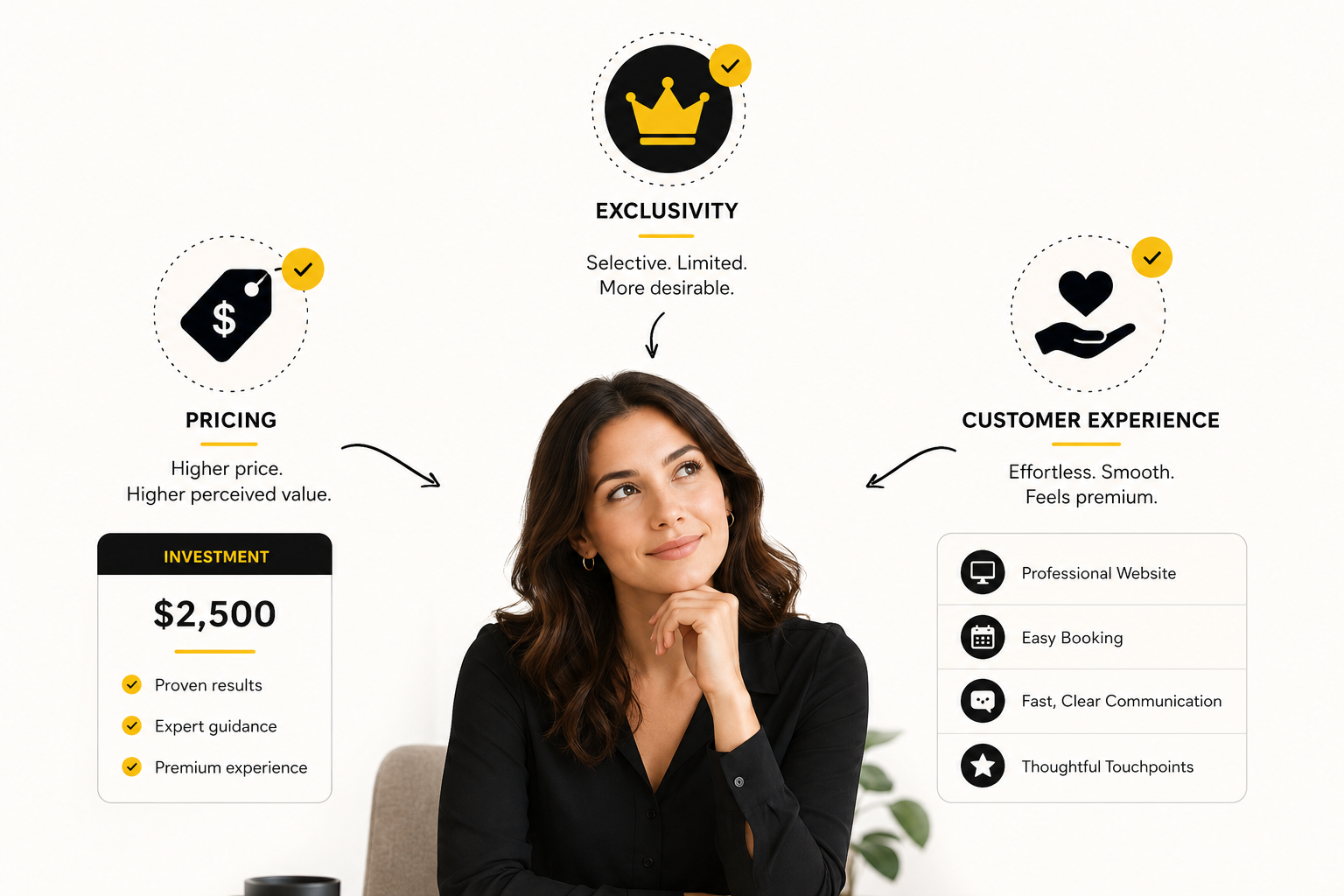
3. Pricing, Exclusivity, and Customer Experience Shape Premium Perception
Pricing strongly influences how premium a business feels. Many customers naturally associate higher prices with higher quality, better outcomes, and greater expertise. Businesses that confidently display premium pricing often appear more established and trustworthy than businesses constantly competing on being “cheap.”
Part of this comes from psychology. People frequently use price as a shortcut for evaluating quality when they lack complete information. Higher pricing can signal confidence because it suggests the business believes strongly in the value of its service.
Exclusivity also increases perceived value. Premium businesses often position themselves as selective rather than available to everyone. Phrases like “accepting limited clients” or “application only” create a sense of scarcity that makes the service feel more desirable and prestigious.
Customer experience also plays a major role in premium perception. Smooth websites, fast load times, easy booking systems, and frictionless communication all make the service feel more refined and professional. Convenience itself becomes part of the premium experience because people are willing to pay more for businesses that make interactions feel simple and effortless.
4. What Makes a Business Feel Cheap — Even When the Service Is Good
Sometimes a business delivers excellent results but still struggles to feel premium because perception is shaped before the actual service experience begins. Customers judge professionalism, value, and credibility based on presentation, consistency, and ease of interaction.
One of the biggest causes of this problem is inconsistent branding. Mismatched colors, outdated graphics, inconsistent logos, or generic messaging create confusion instead of confidence. Premium businesses feel cohesive because every touchpoint reinforces the same identity and quality standard.
Poor user experience also weakens perceived quality immediately. Slow-loading websites, cluttered layouts, broken links, confusing navigation, or complicated booking systems create frustration before trust is fully established. Even small inconveniences can make a business feel less professional and less premium.
Missing trust signals make the problem worse. Businesses without testimonials, reviews, case studies, or visible proof of results leave prospects with little reassurance that the service is worth the investment. Even highly capable businesses can appear lower value when credibility signals are absent.
Ultimately, businesses feel “cheap” not because the service lacks quality, but because the presentation creates uncertainty. Poor experiences create doubt instantly, while lack of clarity weakens confidence before the first conversation even happens.
Conclusion — Premium Businesses Intentionally Design Perception
Businesses that feel premium rarely achieve that perception by accident. In most cases, every part of the experience — from branding and messaging to pricing, trust signals, and customer experience — has been intentionally designed to create confidence before a conversation even begins.
Professional branding creates strong first impressions. Clear messaging communicates value quickly. Testimonials, reviews, and visual proof reinforce credibility. Confident pricing and smooth customer experiences increase perceived value while reducing hesitation.
What makes these elements powerful is that they influence perception before prospects consciously analyze them. A clean website feels more trustworthy. Specific messaging feels more credible. Strong social proof feels reassuring. Smooth booking experiences feel more professional.
Ultimately, customers often decide whether a business feels “premium” long before the first sales call or consultation ever happens. The businesses that understand this best are the ones that intentionally design every touchpoint to communicate quality, confidence, and trust from the very beginning.
FAQs
1. What makes a service business feel “premium” instantly?
A business often feels premium through a combination of professional branding, polished design, confident messaging, strong social proof, transparent pricing, and smooth customer experience. These elements create immediate trust and perceived value before any conversation happens.
2. Why does branding affect how expensive or valuable a business feels?
Branding shapes first impressions. Clean visuals, consistent colors, professional photography, and organized messaging signal professionalism and attention to detail, which people naturally associate with higher quality services.
3. Do higher prices really make a business seem more premium?
In many cases, yes. Customers often associate higher pricing with expertise, confidence, better outcomes, and stronger service quality. Premium pricing can increase perceived value when it is supported by strong branding, trust signals, and customer experience.
4. How can small businesses create a premium image without a huge budget?
Small businesses can improve premium perception by focusing on consistency, clear messaging, professional visuals, simplified booking systems, and visible testimonials. Even simple improvements in presentation and customer experience can significantly increase perceived quality.
5. What are the biggest mistakes that make a business feel “cheap” online?
Common mistakes include inconsistent branding, generic messaging, hidden pricing, slow or cluttered websites, confusing booking flows, and lack of testimonials or reviews. These issues create uncertainty and lower trust before prospects even make contact.