
Every purchase involves some level of uncertainty. Customers rarely know with complete certainty whether a product, service, or investment will deliver the results they want. Instead, they weigh the potential benefits against the perceived risks before making a decision. The greater the uncertainty, the more difficult it becomes to move forward with confidence.
Many businesses assume customers buy because they understand every feature or because the price seems attractive. In reality, buying decisions are driven far more by confidence than by complete information. Customers want enough reassurance to believe they are making the right choice. Trust, clarity, proof, and transparency help reduce uncertainty, making it easier for customers to say yes.
Rather than relying on pressure or aggressive sales tactics, successful businesses remove doubts before they become objections. They answer questions, demonstrate value, and consistently reinforce credibility throughout the buying journey. As uncertainty decreases, confidence naturally increases, making purchasing decisions feel safer and more comfortable.
1. The Three Foundations of Buying Confidence
Customers need confidence in more than the product or service itself. Before making a purchase, they want certainty that the solution will solve their problem, that the person they are buying from is trustworthy, and that the business can consistently deliver on its promises.
Confidence grows when businesses clearly demonstrate meaningful outcomes instead of simply describing features. Trust is strengthened through honest communication, expertise, and consistent follow-through, while reviews, testimonials, certifications, responsive support, and a strong reputation reassure customers that the business is reliable. When all three areas work together, customers feel far more comfortable moving from hesitation to commitment.
2. Trust, Proof, and Simplicity Remove Doubt
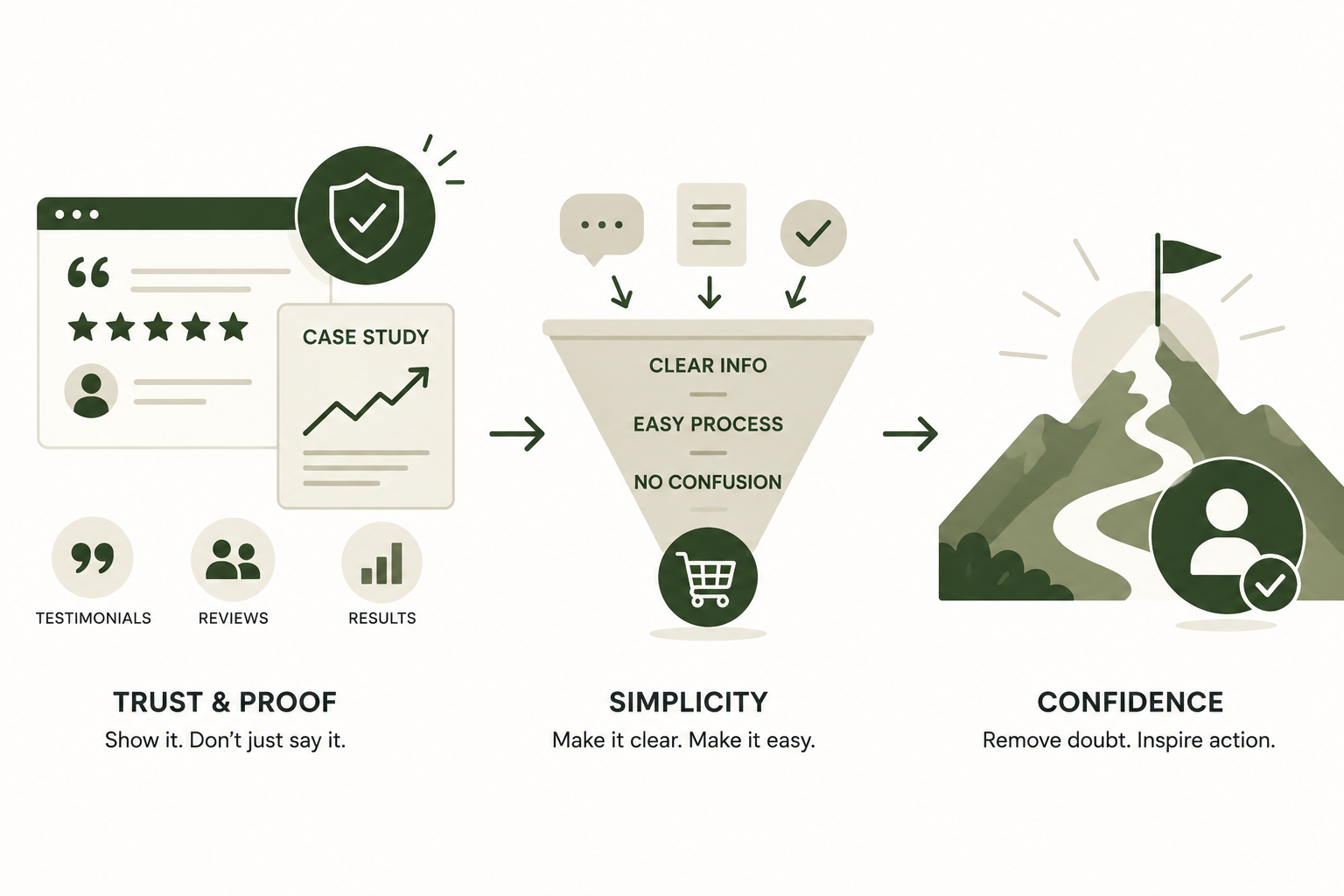
Customers become confident when businesses replace promises with evidence. Clear messaging helps customers understand exactly what is being offered, while testimonials, case studies, reviews, and measurable results provide proof that others have already achieved positive outcomes. Demonstrating results is far more persuasive than listing features because customers care about the improvements a solution creates rather than its technical details.
Many clients hesitate not because they lack interest but because they fear making the wrong decision. High-value purchases, unfamiliar solutions, and complex offers naturally require greater confidence. Businesses reduce this uncertainty through transparent communication, straightforward buying processes, consistent messaging, and by addressing common concerns before customers have to ask. The simpler and clearer the experience becomes, the easier it is for customers to move forward confidently.
3. Building Confidence Throughout the Customer Journey
Buying confidence is built across every interaction a customer has with a business, not just during the sales conversation. Marketing, sales, and customer experience should all reinforce the same promises, creating consistent expectations from the first impression through onboarding and ongoing support.
Confidence continues growing after the sale through reliable service, proactive communication, and consistently delivering on commitments. Positive experiences encourage repeat business, referrals, and stronger customer loyalty because customers feel reassured that they made the right decision. Businesses that continue investing in trust after the purchase strengthen long-term relationships while turning satisfied customers into advocates who willingly recommend them to others.
Conclusion
Customers rarely buy because every doubt has disappeared. They buy because they feel confident enough that the expected value outweighs the remaining uncertainty. Trust, clarity, proof, consistency, and exceptional customer experiences work together to reduce hesitation and make decisions feel safer.
Businesses that focus on removing uncertainty instead of increasing pressure create stronger conversions, healthier customer relationships, and greater long-term loyalty. Confidence begins before the purchase and continues long afterward through consistent delivery and reliable support.
Ultimately, the businesses that earn the most customers are often not the ones with the lowest prices or the most persuasive sales tactics. They are the ones that consistently make clients feel safest choosing them by proving they can deliver the value they promise.

FAQs
1. Why do customers hesitate before making a purchase?
Customers usually hesitate because they feel uncertain about whether a product or service will meet their expectations. Concerns about cost, quality, trust, or choosing the wrong solution can delay buying decisions. Businesses that provide clear information, social proof, and transparent communication help reduce this uncertainty.
2. How can a business build customer confidence before a sale?
Businesses can build confidence by clearly explaining the value they offer, providing testimonials and case studies, sharing measurable results, answering common questions, and maintaining consistent communication throughout the customer journey. These actions help customers feel more certain they are making the right decision.
3. Why is trust more important than persuasion in sales?
Trust reduces the perceived risk of making a purchase. While persuasive marketing may attract attention, customers are far more likely to buy when they believe a business is credible, reliable, and capable of delivering on its promises. Trust creates confidence that lasts beyond the initial sale.
4. What makes customers feel confident enough to buy?
Customers gain confidence when they understand how a solution will solve their problem, trust the person and business they are buying from, and see proof that others have achieved positive results. Clear messaging, transparent processes, reviews, and real customer success stories all contribute to buying confidence.
5. How does customer confidence contribute to long-term business growth?
When customers feel confident in their buying decision, they are more likely to become repeat buyers, recommend the business to others, and remain loyal over time. Strong customer confidence leads to higher retention, more referrals, and sustainable growth built on trust rather than constant sales pressure.
.webp)
.png)