Client relationships rarely break down all at once. By the time a customer formally complains, requests a contract change, or decides to leave, dissatisfaction may have already been developing for weeks or months. The earliest signs are often subtle changes in communication, engagement, support interactions, and overall sentiment.
A shorter email or delayed response may mean nothing on its own. But when several small changes begin appearing together, they can indicate that the client is becoming less engaged. A client can remain technically active while becoming increasingly distant from the relationship.
Recognizing these patterns early gives businesses an opportunity to understand what has changed and address concerns before they become larger problems.
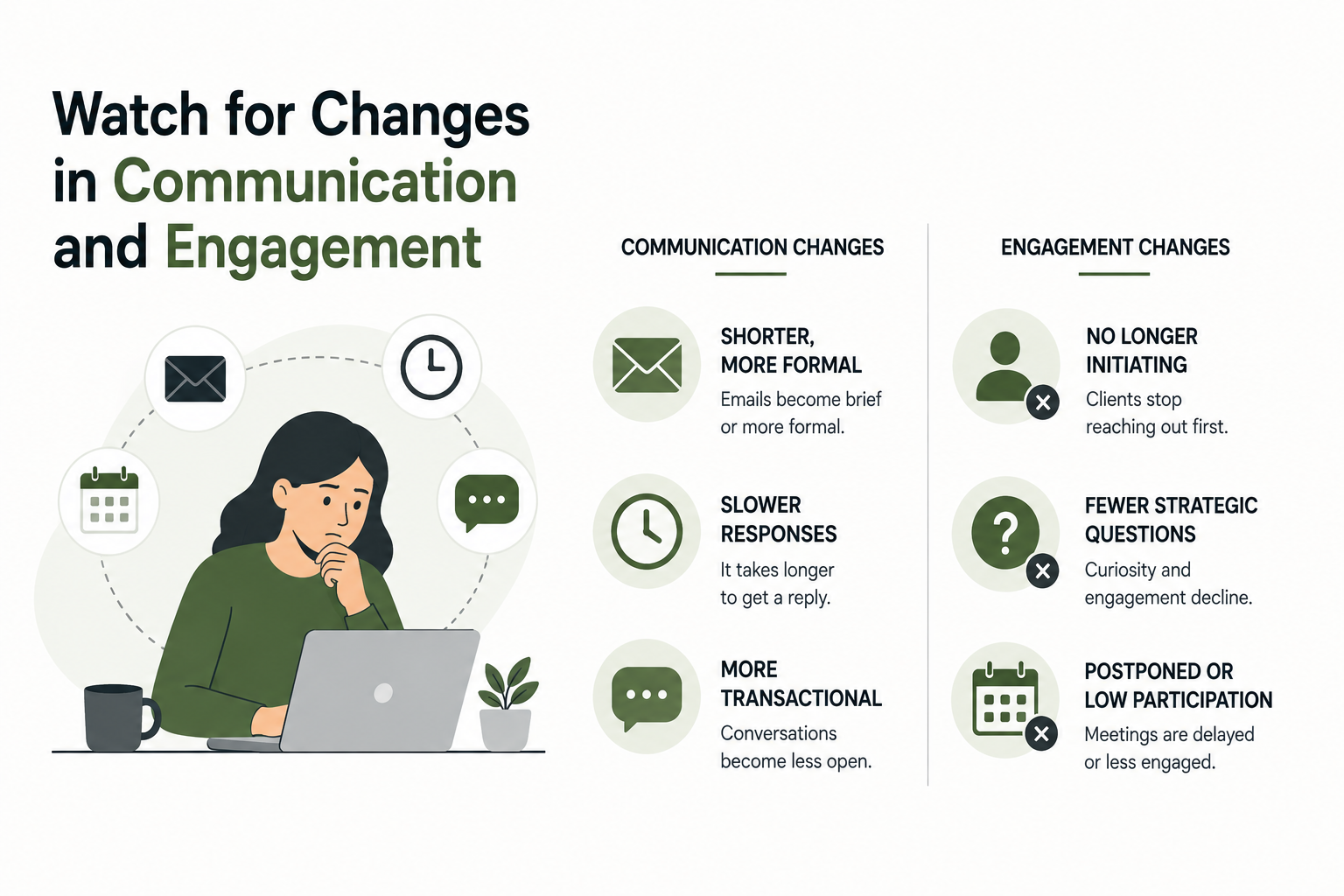
1. Watch for Changes in Communication and Engagement
Changes in communication are often among the earliest signs that a client relationship may be weakening. Emails may become shorter or more formal, responses may take longer, and conversations may become more transactional.
Engagement can change in similar ways. Clients who once initiated conversations may stop reaching out, strategic questions may become less frequent, and meetings may be repeatedly postponed or attended with less participation. Silence should not automatically be interpreted as satisfaction, especially when it represents a noticeable change from the client's previous behavior.
The key is to look for patterns rather than isolated interactions. Tracking response times, communication frequency, meeting participation, and whether clients are still initiating conversations can help businesses recognize meaningful changes early.
2. Pay Attention When Friction Starts Increasing
Support interactions can reveal dissatisfaction before a client directly says they are unhappy. A single support request is rarely concerning, but repeated problems, increasingly critical feedback, and rising customer effort can indicate deeper frustration.
If clients repeatedly raise the same issue, repeat information, or have to follow up multiple times to receive help, the problem may be larger than an individual support ticket. Over time, these experiences can weaken trust and make clients feel that maintaining the relationship requires too much effort.
Changes in tone are also worth watching. Collaborative communication may become more critical or blame-focused, while clients who previously provided regular feedback may stop giving it altogether.
Rather than treating each complaint as an isolated issue, businesses should investigate repeated friction and ask what is causing it. Addressing the underlying problem can prevent temporary frustration from becoming relationship damage.
3. Monitor Financial, Contract, and Usage Signals
Some warning signs become clearer when clients begin reassessing the value they receive. Payment behavior may change, spending may decline, or clients may begin questioning invoices, pricing, discounts, or service costs more closely.
Contract and scope questions can also provide useful signals. A sudden increase in questions about contract terms, service boundaries, or what is included may indicate that a client is reconsidering the relationship. Competitor comparisons can provide another indication that alternatives are being evaluated.
Usage data can offer more objective evidence. Declining logins, fewer orders, reduced feature usage, or lower service utilization may show that a client is becoming less engaged even when they have not formally complained.
These signals become much more meaningful when combined with communication and support patterns. A single late payment may have a simple explanation, but a late payment alongside declining usage, shorter communication, and increased contract questions deserves closer attention.
4. Catch the Breakdown Early and Rebuild the Relationship
The earlier a business notices changes, the more opportunity it has to address the underlying issue. Regular client check-ins and feedback conversations can create a space for clients to explain what is working, what is frustrating, and what may be preventing them from receiving the expected value.
Businesses can also create a simple client health framework that considers communication, engagement, support friction, usage, and financial behavior together. This makes it easier to identify patterns instead of reacting to individual incidents.
Repeated complaints deserve particular attention. Instead of simply closing another support request, businesses should investigate why the same issue continues to occur and whether the client is experiencing unnecessary effort.
The goal is not to assume that every change means a client is preparing to leave. It is to recognize meaningful patterns early enough to ask questions, understand the client's experience, and take action before concerns develop into payment disputes, contract issues, or churn.

Conclusion
Client relationships usually deteriorate through a series of small changes rather than one dramatic event. Communication becomes less collaborative, engagement decreases, support friction increases, and financial or usage patterns may begin to shift.
These changes become more meaningful when they form a pattern. By monitoring communication, engagement, support interactions, financial behavior, usage, and sentiment, businesses can identify relationships that may need attention sooner.
Strong client relationships are maintained by noticing these signals before they become major problems. Businesses that respond early, investigate the underlying causes, and consistently work to deliver value have a better opportunity to protect relationships and prevent avoidable churn.
FAQs
1: What are the early signs of a client relationship breaking down?
Shorter or more formal communication, slower response times, reduced meeting participation, fewer strategic conversations, and increasing support issues can all indicate that a client is becoming less engaged.
2: Does a quiet client always mean they are satisfied?
No. A client who suddenly becomes less responsive or stops initiating conversations may be distancing themselves from the relationship. Changes from their usual communication pattern are more meaningful than silence alone.
3: What support issues can indicate client dissatisfaction?
Repeated complaints about the same issue, increasing support requests, repeated follow-ups, and having to provide the same information multiple times can indicate unresolved frustration and rising customer effort.
4: Can payment or usage changes signal that a client is unhappy?
Yes. Delayed payments, increased invoice scrutiny, reduced spending, declining usage, fewer orders, or reduced engagement with a product or service can indicate that a client is reassessing the value they receive.
5: How can businesses prevent client relationships from breaking down?
Monitor communication, engagement, support friction, usage, and financial behavior together. When meaningful patterns appear, address them early through proactive check-ins, feedback conversations, and efforts to resolve the underlying issue.