
Most customers don’t choose the “best” business. They choose the one they remember first.
The restaurant they keep seeing on Instagram. The consultant who posts useful advice every week. The brand that stays visible long after the first sale. Familiarity quietly builds trust, and trust drives decisions.
That’s why some businesses seem unforgettable while others disappear from memory almost overnight.
In a world overloaded with ads, content, and constant distractions, forgetting is natural. If a business stops showing up, customers often assume it’s no longer relevant. That’s why staying top-of-mind is less about being loud and more about being consistently present.
Visibility Wins: Why Repetition Creates Familiarity
One of the biggest reasons businesses get forgotten is simple: they disappear between sales.
A customer buys once, receives a thank-you email, and then hears nothing for months. Meanwhile, another business keeps appearing regularly through emails, social posts, blogs, videos, or helpful updates. Over time, that repeated exposure builds familiarity.
Psychologists call this the “forgetting curve” — people naturally forget information unless it’s reinforced repeatedly. The same thing happens with brands.
Being seen once creates awareness. Being seen consistently creates recognition.
The businesses people remember are not always the ones with the biggest campaigns. They are the ones that continue showing up with clear messaging and consistent value.
The Businesses People Remember Are Usually the Most Helpful
People rarely remember businesses that constantly shout, “Buy now.”
They remember businesses that helped them.
Helpful brands answer questions, solve problems, and share useful insights before asking for a sale. Educational blogs, practical videos, thoughtful emails, and problem-solving content naturally build trust because they make life easier for the audience.
That usefulness becomes memorable.
When customers consistently learn something valuable from a business, they begin associating that brand with trust, clarity, and expertise. Over time, the business becomes the “go-to” option in their mind.
Because people may forget ads quickly, but they remember businesses that genuinely helped them.
Relationships, Not Transactions, Keep Businesses Relevant
Many businesses disappear from customers’ lives the moment the payment clears.
The product gets delivered. The service ends. Communication stops.
That’s where businesses become forgettable.
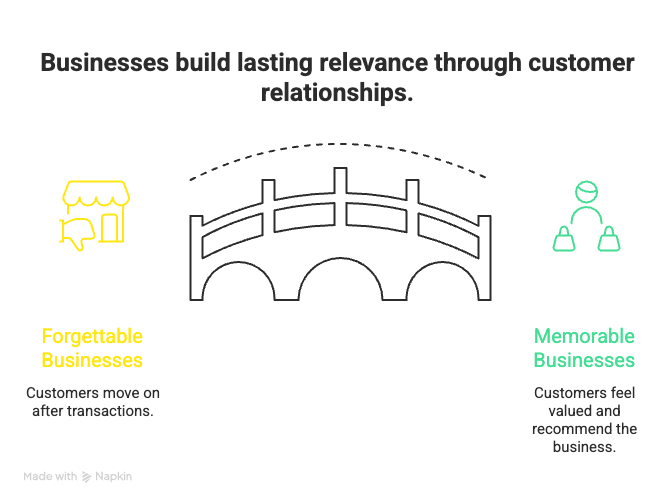
Memorable businesses continue building the relationship after the sale through follow-ups, newsletters, check-ins, updates, and thoughtful customer experiences. These small actions create emotional connection, and emotional connection strengthens memory.
People remember businesses that make them feel valued, not processed.
And that’s often what leads to repeat customers and referrals. Most referrals don’t come from products alone. They come from memorable experiences people feel confident recommending to others.
Clear Brands Stick. Generic Brands Vanish.
One of the fastest ways to become forgettable is to sound exactly like everyone else.
“High-quality service.”
“Customer-focused solutions.”
“We help businesses grow.”
These phrases are so broad they could describe almost any company.
Memorable businesses are clear about who they help, what problem they solve, and why they matter. Strong positioning gives customers an easy mental shortcut to remember the brand later.
But clarity alone is not enough. Personality matters too.
People remember businesses that feel human — brands with a recognizable voice, relatable communication, and authentic personality. In a crowded market, distinct brands stay memorable while generic ones blend together.

Top-of-Mind Businesses Play the Long Game
The businesses people remember rarely rely on one viral campaign or one lucky moment of attention.
They win through consistency.
Helpful content. Reliable experiences. Clear messaging. Repeated visibility. Strong relationships. Over time, these small touchpoints build familiarity and trust.
That’s what keeps a business top-of-mind.
Because staying memorable isn’t a marketing hack. It’s the result of consistently showing up, delivering value, and remaining relevant long enough for people to remember you when it matters most.
In the end, most businesses don’t fail because they’re bad.
They fail because they become forgettable.
FAQs
1. Why do customers forget businesses so quickly?
Customers are constantly exposed to new content, ads, and brands every day. If a business stops showing up consistently through emails, social media, content, or customer communication, people naturally stop thinking about it over time.
2. What does “top-of-mind” mean in marketing?
“Top-of-mind” refers to the businesses people think of first when they need a specific product or service. It usually comes from repeated visibility, strong branding, helpful content, and consistent customer experiences.
3. Is staying top-of-mind only about posting more on social media?
No. Social media helps, but staying memorable usually comes from multiple touchpoints working together — helpful content, follow-ups, email marketing, customer experience, branding, and consistent communication over time.
4. Why is helpful content more memorable than promotional content?
Helpful content builds trust because it solves problems or answers questions before asking for a sale. People are more likely to remember businesses that made their lives easier instead of businesses constantly pushing promotions.
5. How can a small business stay top-of-mind without a huge marketing budget?
Consistency matters more than size. Small businesses can stay memorable by maintaining clear messaging, building customer relationships, posting useful content regularly, and showing up consistently where their audience already spends time.