
When people discover a business online, trust is often formed within seconds. Before visitors fully understand a product or service, they are already making judgments based on what they see and experience. A cluttered homepage, slow-loading website, or unprofessional email address can instantly create doubt. On the other hand, clean design, smooth navigation, and polished branding quietly communicate credibility before the business even says a word.
This reaction is rooted in psychology. Humans naturally search for signals that help them determine whether something feels safe, reliable, and legitimate. Online, those signals come through visual quality, consistency, transparency, and user experience. Businesses that appear trustworthy immediately are rarely accidental — they are intentionally designed to reduce uncertainty and create confidence from the very first interaction.
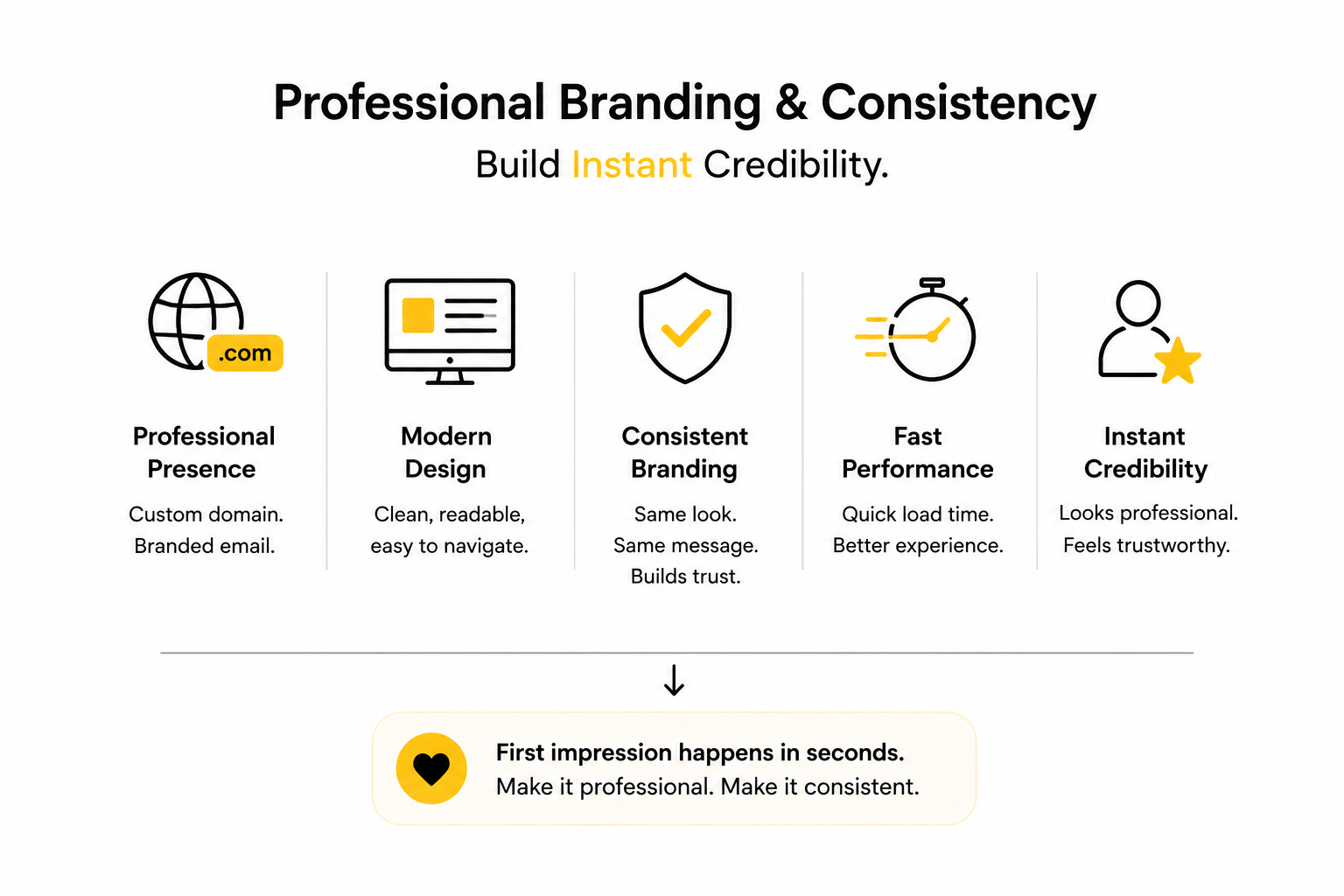
1. Professional Branding and Consistency Build Instant Credibility
Presentation plays a major role in how customers perceive a business online. Professional branding acts like the digital equivalent of walking into a clean, organized storefront. Details such as a custom domain name, branded email address, modern website design, and fast-loading pages all contribute to whether a company feels legitimate.
Even small elements matter. An email address like “[email protected]” feels far more credible than a generic Gmail or Yahoo account because it suggests professionalism and long-term investment. Website design also influences trust immediately. Clean layouts, readable typography, and intuitive navigation subconsciously tell visitors that the business is organized and competent. Meanwhile, outdated visuals or confusing interfaces can make even a legitimate business appear unreliable.
Consistency strengthens that trust further. When a company uses the same logos, colors, messaging, and visual identity across its website, social media pages, and advertisements, customers experience a sense of familiarity and stability. Humans naturally trust what feels recognizable. Inconsistent branding, on the other hand, can create confusion and make businesses seem unprofessional or poorly managed.
Speed is another important factor. Slow websites frustrate users and create doubt about reliability, while fast-loading pages signal professionalism and attention to user experience. Together, branding, consistency, and performance create an emotional impression before visitors consciously analyze the business itself.
2. Social Proof and Transparency Reduce Skepticism
Even strong branding cannot replace the power of other people’s opinions. Social proof is one of the strongest trust-building tools online because customers naturally look to others when deciding whether a business is credible. Reviews, testimonials, ratings, and case studies reassure visitors that real people have already interacted with the company and had positive experiences.
High ratings on platforms like Google or Trustpilot immediately create validation because people tend to trust what others already trust. Testimonials and case studies strengthen this effect by showing real stories and measurable results instead of vague promises. Businesses also increase credibility when they display recognizable client logos, since trust from established organizations often transfers onto the brand itself.
Transparency is equally important. Customers feel safer engaging with businesses that openly display contact information, physical addresses, pricing, return policies, and customer support details. Hidden fees or vague policies create suspicion because they make customers feel uncertain about what they are committing to.
Security features also influence trust significantly. HTTPS encryption and browser padlock icons reassure users that their information is protected while browsing or making purchases. Even if visitors do not fully understand the technical side of website security, they recognize these symbols as signs of safety. Businesses that appear open, secure, and easy to verify naturally feel more trustworthy.

3. Helpful Content Positions Businesses as Experts
Modern customers increasingly trust businesses that provide value before asking for a sale. Helpful content such as blogs, videos, guides, tutorials, and FAQs positions a company as knowledgeable and credible. Instead of simply claiming expertise, businesses demonstrate it through the information they share.
Educational content builds authority because it helps customers solve problems and better understand a topic. A detailed blog post or informative guide signals that the company understands its industry deeply enough to teach others. This naturally increases confidence in the business itself.
Fresh content also signals activity. Regularly updated blogs, videos, or social media posts suggest that a business is active, engaged, and committed to maintaining its online presence. In contrast, outdated websites can make companies appear abandoned or unreliable.
Helpful content also changes how customers perceive a brand emotionally. Businesses that educate their audience appear more customer-focused because they provide useful information before expecting anything in return. Over time, this creates goodwill and strengthens trust naturally.
Conclusion
Businesses that instantly appear trustworthy online are rarely relying on luck. Their credibility is carefully built through professional branding, consistent presentation, social proof, transparency, security, and helpful content that work together to shape customer perception.
What makes these signals powerful is that they influence people emotionally before they consciously analyze them. A clean website feels safer. Positive reviews feel reassuring. Consistent branding feels reliable. Helpful content feels authoritative. Individually, these details may seem small, but together they determine whether customers continue engaging with a business or leave immediately.
In today’s digital environment, customers often decide whether they trust a business before reading a product description in full or speaking to a representative. Online trust happens quickly, quietly, and emotionally — built through dozens of subtle signals that collectively answer one important question: “Does this business feel legitimate?”
FAQs
1. Why do people judge a business so quickly online?
People naturally make fast decisions based on first impressions. Website design, branding, loading speed, and professionalism all create immediate emotional reactions that influence whether a business feels trustworthy or suspicious within seconds.
2. Does a professional email address really matter?
Yes. A branded email address like “[email protected]” appears more credible and established than a generic Gmail or Yahoo account. Small details like this subtly influence how professional a business feels.
3. How important are online reviews for building trust?
Online reviews are extremely important because they act as social proof. Positive ratings, testimonials, and customer experiences reassure visitors that other people have already trusted the business successfully.
4. What website features make a business appear more trustworthy?
Features such as fast-loading pages, HTTPS security, clean design, easy navigation, visible contact information, transparent pricing, and professional branding all help businesses appear more reliable online.
5. Why does helpful content increase customer trust?
Helpful content like blogs, guides, and videos positions businesses as experts instead of just sellers. Educational content demonstrates knowledge, provides value to customers, and makes the business appear more credible and customer-focused.